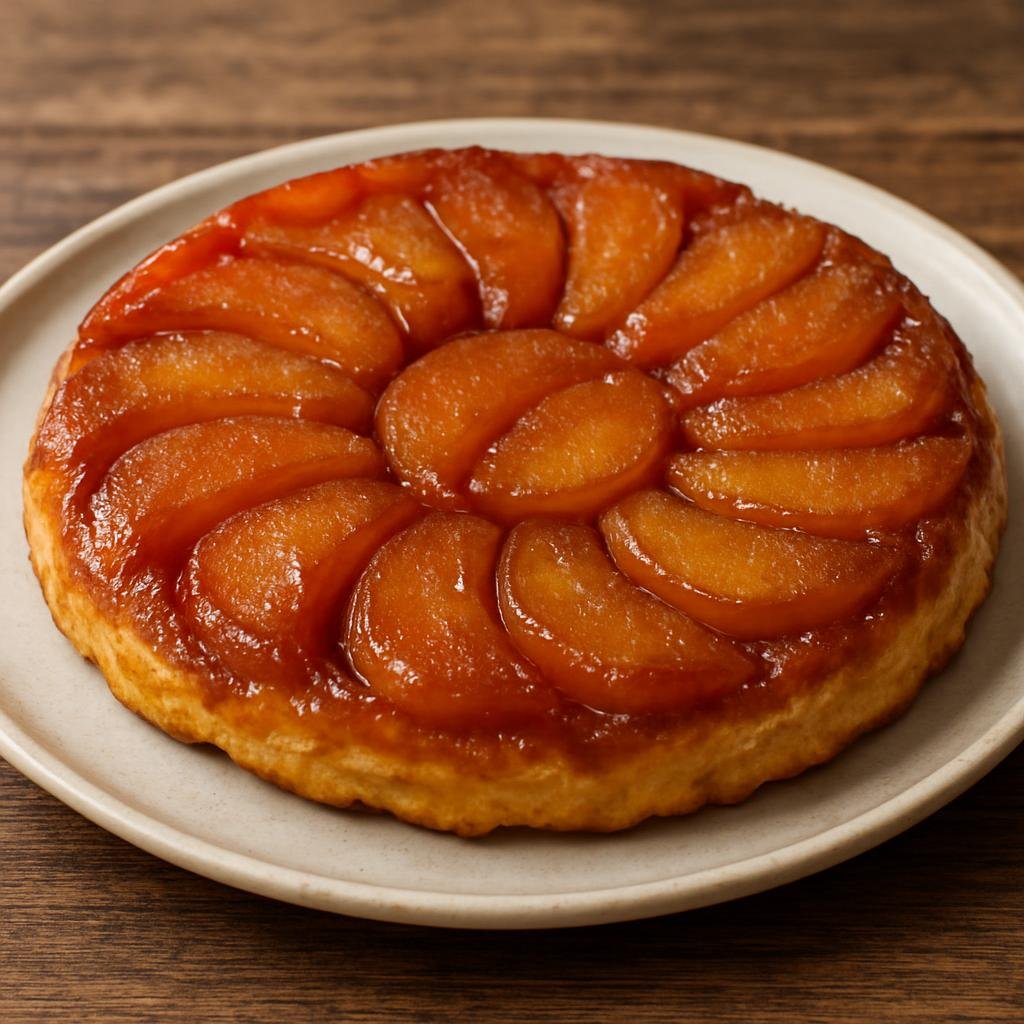
Entree: France – Central Culinary Region – Tarte Tatin (Upside-down caramelized apple tart baked under pastry then inverted to serve)
Food safety reminder: Follow safe food-handling practices and use a food thermometer to verify safe internal cooking temperatures.
Ingredients
U.S. measurements first, metric equivalents in parentheses. Conversions are approximate; oz means weight ounces, not fluid ounces.
- 1/2 cup (113 g) unsalted butter
- 1 cup (200 g) granulated sugar
- 6 medium apples, approx. 2 lb (900 g), peeled, cored, and halved
- 1 tbsp (15 ml) lemon juice
- 1/4 tsp (1 g) fine sea salt
- 1/2 tsp (1 g) ground cinnamon (optional)
- 1 sheet (10 oz (285 g)) frozen puff pastry, thawed to fit a 9-inch (23 cm) pan
- 1 tbsp (15 ml) water (if needed to loosen caramel)
- Whipped cream or crème fraîche for serving (optional)
Show original ingredient measurements
- 1/2 cup (113 g) unsalted butter
- 1 cup (200 g) granulated sugar
- 6 medium apples, approx. 2 lb (900 g), peeled, cored, and halved
- 1 tbsp (15 ml) lemon juice
- 1/4 tsp (1 g) fine sea salt
- 1/2 tsp (1 g) ground cinnamon (optional)
- 1 sheet (10 oz / 285 g) frozen puff pastry, thawed to fit a 9-inch (23 cm) pan
- 1 tbsp (15 ml) water (if needed to loosen caramel)
- Whipped cream or crème fraîche for serving (optional)
Instructions
U.S. measurements first, metric equivalents in parentheses. Conversions are approximate.
1. Preheat the oven to 375°F (190°C). Have a 9-inch (23 cm) ovenproof heavy skillet or tart pan ready.
2. In the skillet over medium heat, melt the butter, then add the sugar in an even layer. Cook without stirring for 6–8 minutes until the sugar dissolves and turns a deep amber caramel; gently swirl the pan if needed to color evenly.
3. Remove the skillet from the heat and stir in the lemon juice, salt, and cinnamon if using. If the caramel becomes too thick, add up to 1 tbsp (15 ml) water to loosen slightly.
4. Arrange the apple halves tightly in concentric circles, cut side up, pressing them into the caramel so they fit snugly. Return to medium heat for 5 minutes to begin softening the apples in the caramel.
5. Roll or trim the puff pastry into a circle slightly larger than the skillet (about 10–11 inches (25–28 cm)). Drape the pastry over the apples, tucking the edges down around the apples inside the skillet.
6. Bake in the preheated oven for 25–30 minutes, or until the pastry is puffed and deep golden brown.
7. Remove from the oven and let rest 5–10 minutes to allow the caramel to settle. Run a knife around the edge of the pastry to loosen.
8. Place a serving plate larger than the skillet over the pan and quickly invert the skillet so the tart releases onto the plate, caramel side up. If any apples stick, lift them back into place carefully.
9. Serve warm, plain or with a dollop of whipped cream or crème fraîche.
Show original instructions
1. Preheat the oven to 375°F (190°C). Have a 9-inch (23 cm) ovenproof heavy skillet or tart pan ready.
2. In the skillet over medium heat, melt the butter, then add the sugar in an even layer. Cook without stirring for 6–8 minutes until the sugar dissolves and turns a deep amber caramel; gently swirl the pan if needed to color evenly.
3. Remove the skillet from the heat and stir in the lemon juice, salt, and cinnamon if using. If the caramel becomes too thick, add up to 1 tbsp (15 ml) water to loosen slightly.
4. Arrange the apple halves tightly in concentric circles, cut side up, pressing them into the caramel so they fit snugly. Return to medium heat for 5 minutes to begin softening the apples in the caramel.
5. Roll or trim the puff pastry into a circle slightly larger than the skillet (about 10–11 inches / 25–28 cm). Drape the pastry over the apples, tucking the edges down around the apples inside the skillet.
6. Bake in the preheated oven for 25–30 minutes, or until the pastry is puffed and deep golden brown.
7. Remove from the oven and let rest 5–10 minutes to allow the caramel to settle. Run a knife around the edge of the pastry to loosen.
8. Place a serving plate larger than the skillet over the pan and quickly invert the skillet so the tart releases onto the plate, caramel side up. If any apples stick, lift them back into place carefully.
9. Serve warm, plain or with a dollop of whipped cream or crème fraîche.
Per serving | Servings: 6
Generated: 2026-11-05T19:53:39+00:00
*Values are estimates based on USDA data and mathematical calculations. Actual values may vary. Where data are unavailable, those contributions are excluded. Calories, Carbohydrates, Protein, Fat, Saturated fat, Cholesterol, Fiber, Sugar, Sodium, Potassium, Calcium, Iron, Vitamin A and Vitamin C are known subtotals. Missing contributions are unknown, not zero.