Entree: Sri Lanka – Southern Coast – පිට්ටු ➤ Pittu (Steamed layered cylinders of rice flour and grated coconut traditionally served with spicy relishes or curries)
Food safety reminder: Follow safe food-handling practices and use a food thermometer to verify safe internal cooking temperatures.
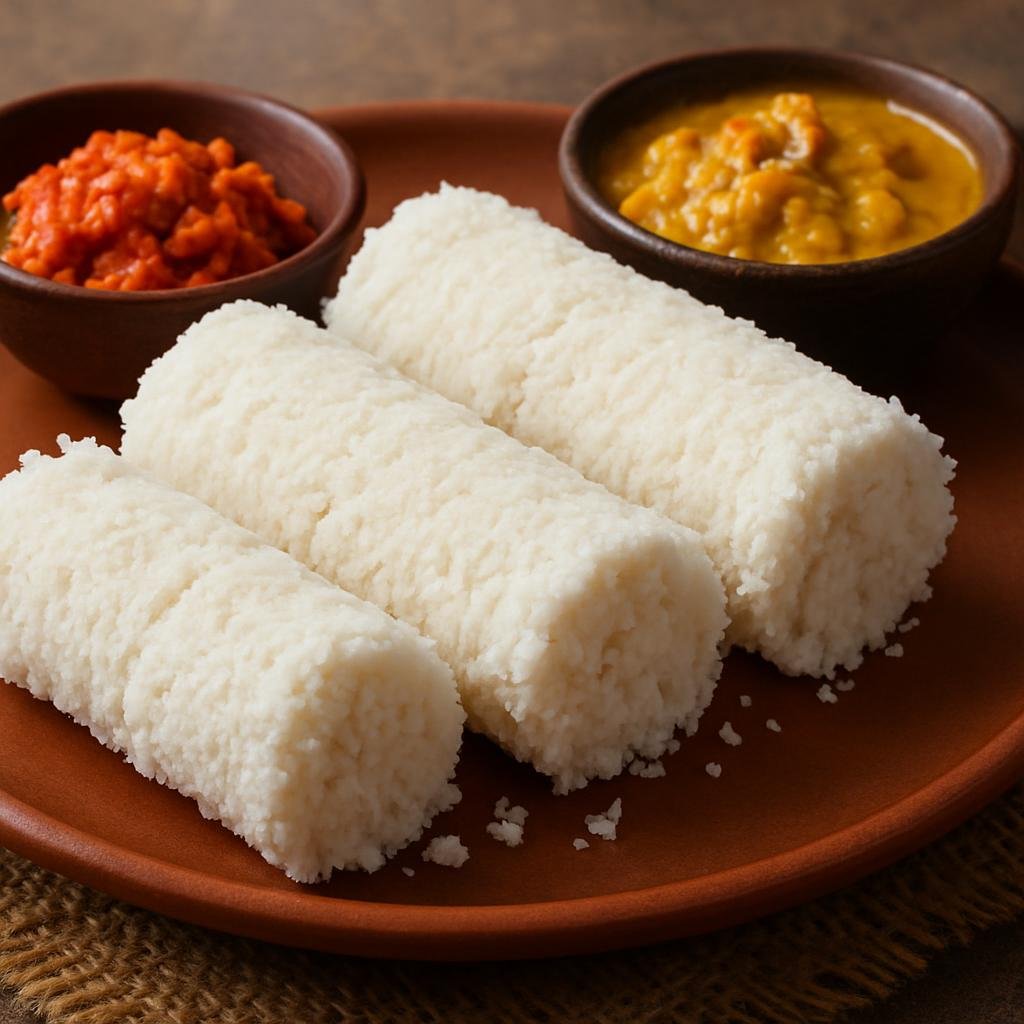
Serving Size: 4
Approximate Time
Prep
20 min
Cook
12 min
Total
32 min
Ingredients
- 3 cups (360 g) rice flour (preferably roasted or pittu flour)
- 1 1/2 cups (150 g) freshly grated coconut, plus 1 cup (100 g) for pol sambol
- 1 tsp (6 g) salt, plus 1/2 tsp (3 g) for pol sambol
- 1 1/4 cups (300 ml) boiling water, plus more as needed
- 2 tbsp (30 ml) coconut oil or melted ghee for greasing
- 2 pandan leaves (optional)
- 1 small red onion, finely chopped, about 1/4 cup (40 g) for pol sambol
- 2 tbsp (30 ml) lime juice for pol sambol
- 1-2 tsp (5-10 g) red chili flakes or 1 small fresh red chili, finely chopped, for pol sambol
- 1/4 tsp (1 g) sugar for pol sambol
Instructions
U.S. measurements first, metric equivalents in parentheses. Conversions are approximate.
1. Toast the rice flour (if not using roasted pittu flour): spread 3 cups (360 g) rice flour in a dry pan over medium-low heat, stirring constantly until warm and slightly fragrant, 4–6 minutes; do not brown. Let cool.
2. Combine rice flour and 1 1/2 cups (150 g) grated coconut in a large bowl; mix in 1 tsp (6 g) salt.
3. Pour 1 1/4 cups (300 ml) boiling water over the flour mixture a little at a time, stirring and rubbing the mixture between your palms until it forms moist, coarse crumbs that hold shape when pressed; add up to 2–3 tbsp (30–45 ml) more water if too dry.
4. Grease the pittu mold or a clean bamboo cylinder with 2 tbsp (30 ml) coconut oil; pack alternating layers of the rice-coconut mixture and the remaining coconut (if you wish visible layers) into the mold, pressing gently but firmly.
5. Steam: set the mold in a steamer over simmering water (add pandan leaves to the water if using) and steam for 8–12 minutes until cooked through; invert and tap out pittu onto a plate, break into portions.
6. Make pol sambol: in a bowl combine 1 cup (100 g) grated coconut, 1 small finely chopped red onion (about 1/4 cup (40 g)), 1–2 tsp (5–10 g) red chili flakes or 1 chopped fresh red chili, 2 tbsp (30 ml) lime juice, 1/2 tsp (3 g) salt and 1/4 tsp (1 g) sugar; mix well and adjust seasoning.
7. Serve hot pittu with pol sambol and your choice of curries or dhal; to reheat, steam again 3–4 minutes until warm.
Show original instructions
1. Toast the rice flour (if not using roasted pittu flour): spread 3 cups (360 g) rice flour in a dry pan over medium-low heat, stirring constantly until warm and slightly fragrant, 4–6 minutes; do not brown. Let cool.
2. Combine rice flour and 1 1/2 cups (150 g) grated coconut in a large bowl; mix in 1 tsp (6 g) salt.
3. Pour 1 1/4 cups (300 ml) boiling water over the flour mixture a little at a time, stirring and rubbing the mixture between your palms until it forms moist, coarse crumbs that hold shape when pressed; add up to 2–3 tbsp (30–45 ml) more water if too dry.
4. Grease the pittu mold or a clean bamboo cylinder with 2 tbsp (30 ml) coconut oil; pack alternating layers of the rice-coconut mixture and the remaining coconut (if you wish visible layers) into the mold, pressing gently but firmly.
5. Steam: set the mold in a steamer over simmering water (add pandan leaves to the water if using) and steam for 8–12 minutes until cooked through; invert and tap out pittu onto a plate, break into portions.
6. Make pol sambol: in a bowl combine 1 cup (100 g) grated coconut, 1 small finely chopped red onion (about 1/4 cup / 40 g), 1–2 tsp (5–10 g) red chili flakes or 1 chopped fresh red chili, 2 tbsp (30 ml) lime juice, 1/2 tsp (3 g) salt and 1/4 tsp (1 g) sugar; mix well and adjust seasoning.
7. Serve hot pittu with pol sambol and your choice of curries or dhal; to reheat, steam again 3–4 minutes until warm.
Estimated Nutritional Information*
Per serving | Servings: 4
Calories: 536 kcal
Carbohydrates: 81 g
Protein: 6.9 g
Fat: 20.7 g
Fiber: 6.3 g
Sodium: 594 mg
Potassium: 266 mg
Calcium: 21 mg
Iron: 1.38 mg
Vitamin C: 4.9 mg
Generated: 2026-11-05T19:51:21+00:00
*Values are estimates based on USDA data and mathematical calculations. Actual values may vary. Where data are unavailable, those contributions are excluded. Calories, Carbohydrates, Protein, Fat, Fiber, Sodium, Potassium, Calcium, Iron and Vitamin C are known subtotals. Missing contributions are unknown, not zero.