Entree: India – Rayalaseema – జొన్న రొట్టె ➤ Jonna Rotti (Unleavened sorghum flatbread cooked on a hot griddle)
Food safety reminder: Follow safe food-handling practices and use a food thermometer to verify safe internal cooking temperatures.
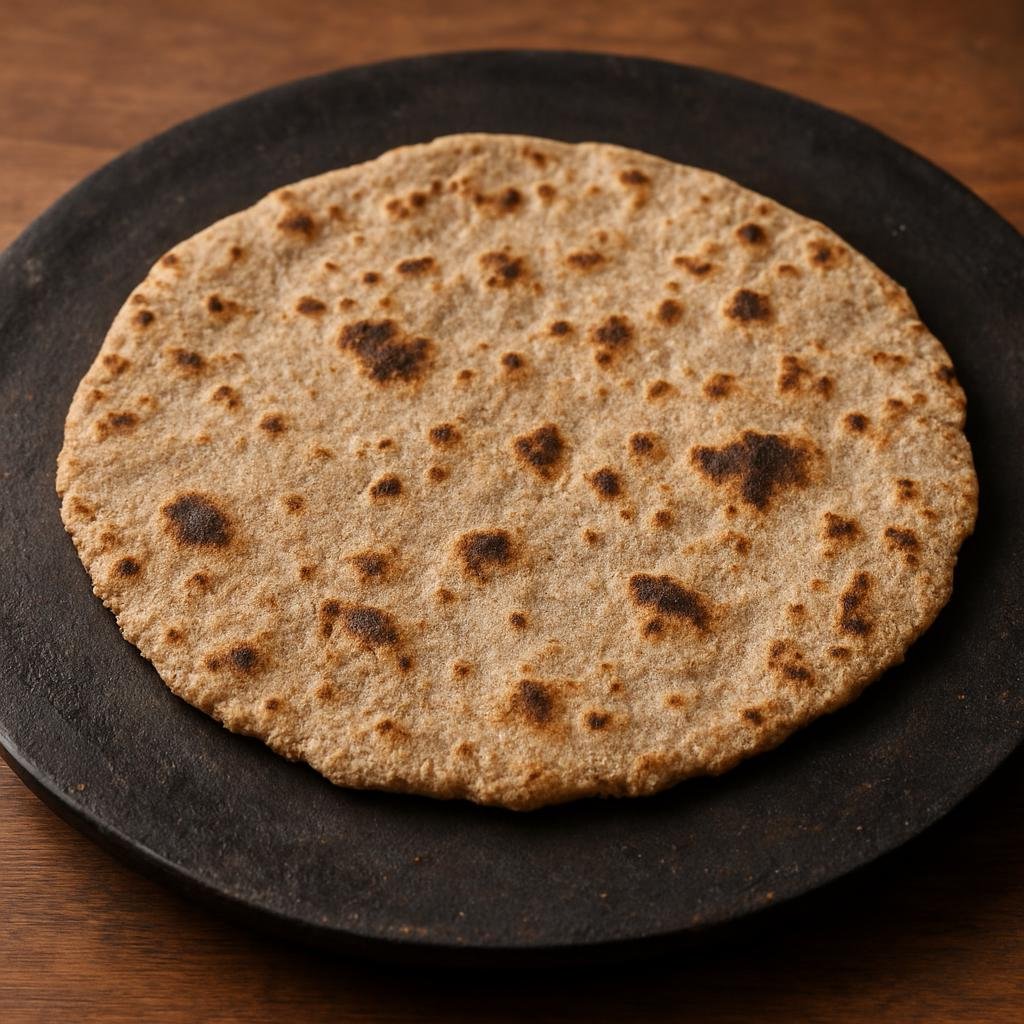
Serving Size: 4
Approximate Time
Prep
25 min
Cook
5 min
Additional
15 min
Total
40 min
Ingredients
- 3 cups (360 g) jowar (sorghum) flour
- 1 1/4 cups (300 ml) boiling water, plus more as needed
- 1 tsp (6 g) salt
- 2 tbsp (30 ml) oil or ghee, plus extra for cooking
- 1/4 cup (30 g) whole wheat flour or rice flour for dusting (optional)
- Ghee or butter for serving, as desired
Instructions
U.S. measurements first, metric equivalents in parentheses. Conversions are approximate.
1. Place the jowar flour and salt in a large bowl. Pour the boiling water over the flour gradually, stirring with a wooden spoon until it comes together into a coarse dough.
2. When cool enough to handle, knead the dough in the bowl or on a clean surface for 3–5 minutes until smooth and pliable; add a little more warm water (1–2 tbsp (15–30 ml)) if needed. Brush with 1 tbsp (15 ml) oil, cover, and rest 10–15 minutes.
3. Divide the dough into 8 equal balls. Lightly flatten one ball, dust with a little whole wheat or rice flour if using, and either roll out gently to 6–7 inch (15.2 to 17.8 cm) rounds or pat/press between two sheets of plastic or on a cloth to form thin discs (sorghum dough is fragile; pressing often gives better results).
4. Heat a cast-iron tawa or heavy skillet over medium-high heat. Place a roti on the hot surface and cook 45–60 seconds until the underside develops pale brown spots; flip and cook the other side 45–60 seconds.
5. Apply a little ghee or oil and press gently with a cloth or spatula to encourage even cooking and slight puffing; cook another 15–30 seconds per side until speckled and cooked through.
6. Keep cooked rotis wrapped in a clean cloth to stay soft. Serve hot brushed with ghee alongside curries, chutneys, or pickles.
Show original instructions
1. Place the jowar flour and salt in a large bowl. Pour the boiling water over the flour gradually, stirring with a wooden spoon until it comes together into a coarse dough.
2. When cool enough to handle, knead the dough in the bowl or on a clean surface for 3–5 minutes until smooth and pliable; add a little more warm water (1–2 tbsp/15–30 ml) if needed. Brush with 1 tbsp (15 ml) oil, cover, and rest 10–15 minutes.
3. Divide the dough into 8 equal balls. Lightly flatten one ball, dust with a little whole wheat or rice flour if using, and either roll out gently to 6–7 inch rounds or pat/press between two sheets of plastic or on a cloth to form thin discs (sorghum dough is fragile; pressing often gives better results).
4. Heat a cast-iron tawa or heavy skillet over medium-high heat. Place a roti on the hot surface and cook 45–60 seconds until the underside develops pale brown spots; flip and cook the other side 45–60 seconds.
5. Apply a little ghee or oil and press gently with a cloth or spatula to encourage even cooking and slight puffing; cook another 15–30 seconds per side until speckled and cooked through.
6. Keep cooked rotis wrapped in a clean cloth to stay soft. Serve hot brushed with ghee alongside curries, chutneys, or pickles.
Estimated Nutritional Information*
Per serving | Servings: 4
Calories: 415 kcal
Carbohydrates: 74.4 g
Protein: 10.1 g
Fat: 7.8 g
Saturated fat: 1.2 g
Fiber: 2.6 g
Sugar: 0.3 g
Sodium: 586 mg
Potassium: 104 mg
Calcium: 17 mg
Iron: 4.53 mg
Nutrition estimated: November 5, 2026
*Values are estimates based on USDA data and mathematical calculations. Actual values may vary. Where data are unavailable, those contributions are excluded. Calories, Carbohydrates, Protein, Fat, Saturated fat, Fiber, Sugar, Sodium, Potassium, Calcium and Iron are known subtotals. Missing contributions are unknown, not zero.