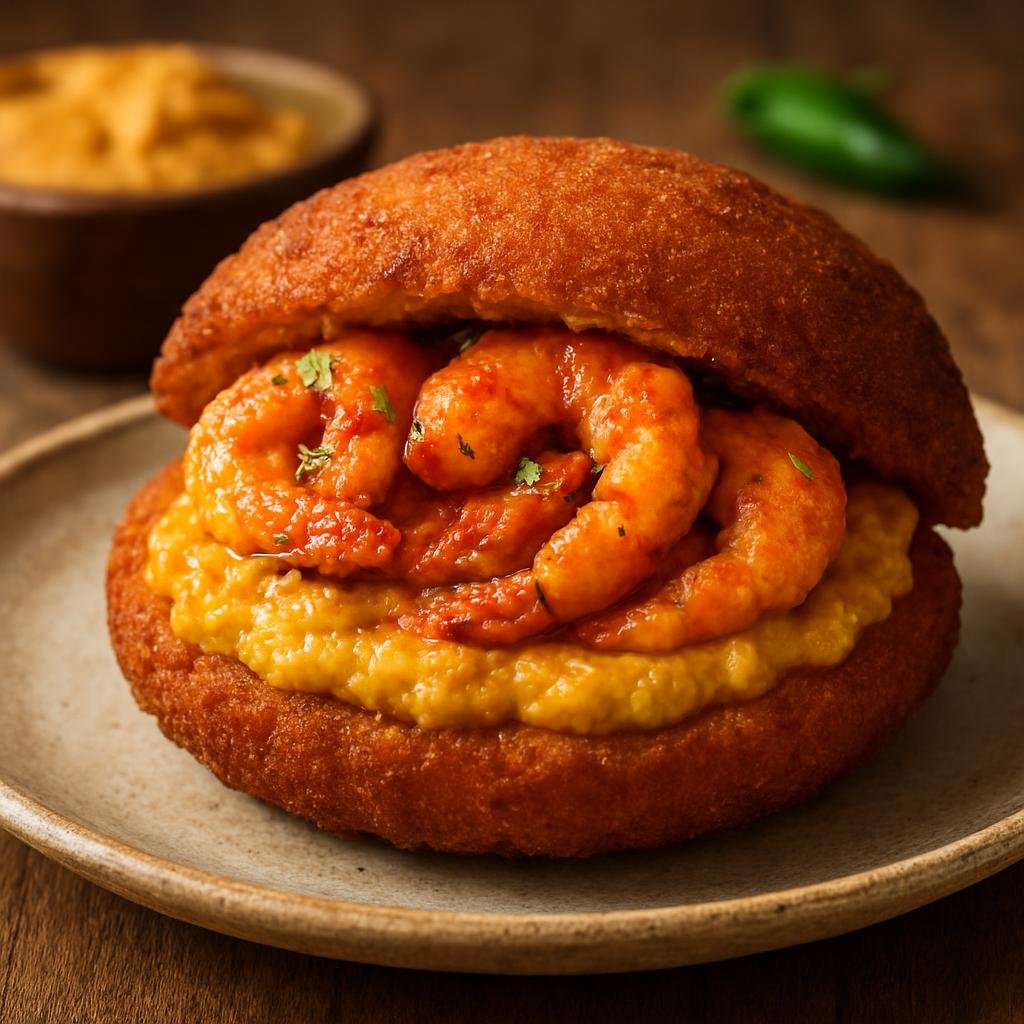
Entree: Brazil – Brazilian Street Food – Acarajé (Deep-fried black-eyed-pea fritters from Bahia traditionally served split and filled with a spicy shrimp and creamy vatapá filling)
Food safety reminder: Follow safe food-handling practices and use a food thermometer to verify safe internal cooking temperatures.
Serving Size: 4
Approximate Time
Prep
35 min
Cook
15 min
Additional
8 hrs
Total
8 hrs 30 min
Ingredients
U.S. measurements first, metric equivalents in parentheses. Conversions are approximate; oz means weight ounces, not fluid ounces.
- 2 cups (400 g) dried black-eyed peas
- 1 tsp (5 g) salt
- 1 medium onion, roughly chopped (about 5 1/4 oz (150 g))
- 3 cloves garlic, peeled
- 1/2 tsp (2 g) freshly ground black pepper
- 1/2 cup (120 ml) dendê (palm) oil, plus extra for frying (dendê oil is traditional)
- 2–3 cups (480–720 ml) neutral vegetable oil for deep frying
- 8 oz (225 g) cooked shrimp, peeled and roughly chopped
- 1 cup (240 ml) coconut milk
- 1/2 cup (120 ml) dry white bread crumbs or 2 slices stale bread, torn and soaked
- 1/4 cup (30 g) roasted peanuts or cashews
- 1 small fresh hot pepper (malagueta) or 1/4 tsp (1 g) cayenne pepper, minced (adjust to taste)
- 1 tbsp (15 ml) lime juice
- 2 tbsp (30 g) chopped fresh cilantro
- 1 lime, cut into wedges for serving
- Coarse sea salt for seasoning
Show original ingredient measurements
- 2 cups (400 g) dried black-eyed peas
- 1 tsp (5 g) salt
- 1 medium onion, roughly chopped (about 150 g)
- 3 cloves garlic, peeled
- 1/2 tsp (2 g) freshly ground black pepper
- 1/2 cup (120 ml) dendê (palm) oil, plus extra for frying (dendê oil is traditional)
- 2–3 cups (480–720 ml) neutral vegetable oil for deep frying
- 8 oz (225 g) cooked shrimp, peeled and roughly chopped
- 1 cup (240 ml) coconut milk
- 1/2 cup (120 ml) dry white bread crumbs or 2 slices stale bread, torn and soaked
- 1/4 cup (30 g) roasted peanuts or cashews
- 1 small fresh hot pepper (malagueta) or 1/4 tsp (1 g) cayenne pepper, minced (adjust to taste)
- 1 tbsp (15 ml) lime juice
- 2 tbsp (30 g) chopped fresh cilantro
- 1 lime, cut into wedges for serving
- Coarse sea salt for seasoning
Instructions
1. Soak and peel the beans: cover the dried black-eyed peas with water and soak 8 hours or overnight. Rub the soaked beans between your hands to loosen and remove skins, rinsing repeatedly until skins are gone; drain well.
2. Make the bean paste: in a food processor, combine drained peeled beans, chopped onion, garlic, salt, and pepper and process to a smooth, thick paste, scraping down sides as needed. The mixture should be airy and spreadable; if too dry, add 1–2 tbsp (15–30 ml) water.
3. Prepare the vatapá-style filling: in a blender, combine coconut milk, soaked bread, roasted peanuts or cashews, malagueta or cayenne, and a pinch of salt; blend until smooth. In a small saucepan over medium heat, warm 1/2 cup (120 ml) dendê oil, add the blended mixture and cook, stirring, until it thickens to a creamy, spreadable consistency, about 6–8 minutes. Stir in lime juice and cilantro, then fold in the chopped shrimp and keep warm.
4. Heat frying oil: in a deep pot, heat 2–3 cups (480–720 ml) vegetable oil to 350°F (175°C). Keep a bowl of cool water nearby for shaping.
5. Form and fry the acarajé: wet your hands, take a heaping tablespoon of bean paste and shape into a small oblong or ball about 1.5–2 in (3.5–5 cm) across. Carefully drop a few at a time into the hot oil, frying until golden and puffed, about 4–6 minutes, turning once. Remove to a rack or paper towels to drain and season lightly with coarse salt.
6. Assemble and serve: split each acarajé along one side (like a small pocket), spoon in the warm vatapá-shrimp filling and drizzle a little extra dendê oil if desired. Serve immediately with lime wedges and chopped cilantro.
Estimated Nutritional Information*
Per serving | Servings: 4
Calories: 848 kcal
Carbohydrates: 74.8 g
Protein: 41.6 g
Fat: 46.1 g
Saturated fat: 17.8 g
Cholesterol: 106 mg
Sodium: 606 mg
Potassium: 1602 mg
Calcium: 198 mg
Iron: 10.28 mg
Generated: 2026-11-06T03:36:16+00:00
*Values are estimates based on USDA data and mathematical calculations. Actual values may vary. Where data are unavailable, those contributions are excluded. Calories, Carbohydrates, Protein, Fat, Saturated fat, Cholesterol, Sodium, Potassium, Calcium and Iron are known subtotals. Missing contributions are unknown, not zero.