Entree: United Kingdom – Cornwall & West Country – Cornish Hake (Pan-seared Atlantic hake fillets with a cider-butter sauce and parsley)
Food safety reminder: Follow safe food-handling practices and use a food thermometer to verify safe internal cooking temperatures.
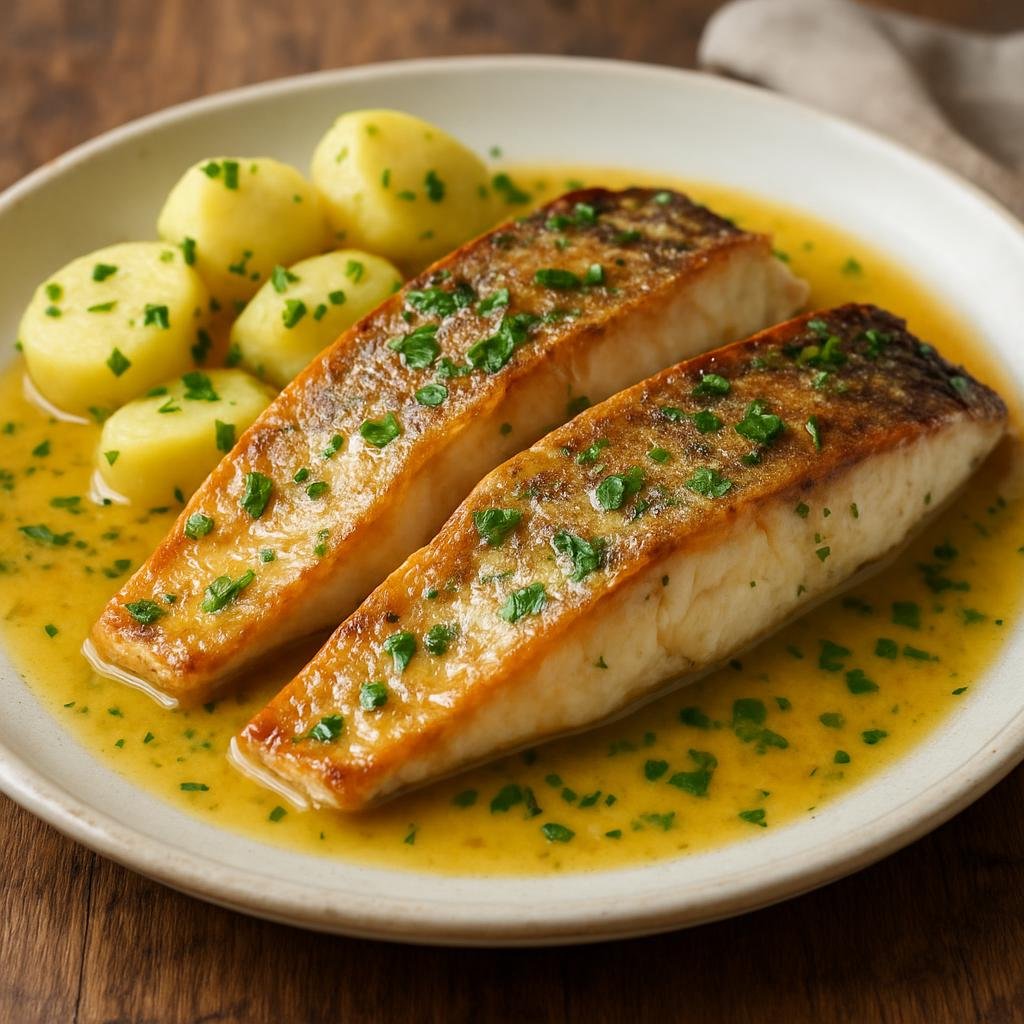
Serving Size: 4
Approximate Time
Prep
20 min
Cook
18 min
Total
40 min
Ingredients
U.S. measurements first, metric equivalents in parentheses. Conversions are approximate; oz means weight ounces, not fluid ounces.
- 4 hake fillets, approx. 6 oz (170 g) each
- 1/2 cup (60 g) all-purpose flour for dusting
- 2 tsp (10 g) salt, plus more to taste
- 1/2 tsp (1 g) ground black pepper
- 2 tbsp (30 ml) olive oil
- 2 tbsp (28 g) unsalted butter
- 2 shallots, finely chopped (about 3 oz (85 g))
- 2 cloves garlic, minced
- 1/2 cup (120 ml) dry West Country cider or dry white wine
- 1 cup (240 ml) fish stock or light vegetable stock
- 2 tbsp (30 ml) lemon juice
- 1 lb (454 g) new potatoes, halved or quartered depending on size
- 2 tbsp (8 g) fresh flat-leaf parsley, chopped
- Lemon wedges to serve
Show original ingredient measurements
- 4 hake fillets, approx. 6 oz (170 g) each
- 1/2 cup (60 g) all-purpose flour for dusting
- 2 tsp (10 g) salt, plus more to taste
- 1/2 tsp (1 g) ground black pepper
- 2 tbsp (30 ml) olive oil
- 2 tbsp (28 g) unsalted butter
- 2 shallots, finely chopped (about 3 oz / 85 g)
- 2 cloves garlic, minced
- 1/2 cup (120 ml) dry West Country cider or dry white wine
- 1 cup (240 ml) fish stock or light vegetable stock
- 2 tbsp (30 ml) lemon juice
- 1 lb (454 g) new potatoes, halved or quartered depending on size
- 2 tbsp (8 g) fresh flat-leaf parsley, chopped
- Lemon wedges to serve
Instructions
U.S. measurements first, metric equivalents in parentheses. Conversions are approximate.
1. Place the potatoes in a pot of salted cold water, bring to a boil, and simmer until tender, about 12–15 minutes. Drain and keep warm.
2. Pat hake fillets dry, season with 1 tsp (5 ml) salt and pepper, and lightly dust both sides with flour, shaking off excess.
3. Heat 2 tbsp (30 ml) olive oil in a large skillet over medium-high heat. Add the hake fillets skin-side down if skin-on, and cook until golden and just cooked through, about 3–4 minutes per side depending on thickness. Remove fillets to a warm plate and cover loosely.
4. In the same skillet, reduce heat to medium and add 2 tbsp (30 ml) butter. Add the chopped shallots and cook until softened, about 2–3 minutes. Add the minced garlic and cook 30 seconds.
5. Pour in the cider and scrape up any browned bits, reducing by half, then add the fish stock and simmer 2–3 minutes until slightly reduced.
6. Stir in the lemon juice and the remaining 1 tsp (5 ml) salt, then swirl in an extra 1 tbsp (15 ml) butter if desired to finish the sauce. Return hake to the pan briefly to warm through and coat with sauce.
7. Serve each fillet with boiled new potatoes, spoon the cider-butter sauce over the fish, sprinkle with chopped parsley, and offer lemon wedges at the table.
Show original instructions
1. Place the potatoes in a pot of salted cold water, bring to a boil, and simmer until tender, about 12–15 minutes. Drain and keep warm.
2. Pat hake fillets dry, season with 1 tsp salt and pepper, and lightly dust both sides with flour, shaking off excess.
3. Heat 2 tbsp olive oil in a large skillet over medium-high heat. Add the hake fillets skin-side down if skin-on, and cook until golden and just cooked through, about 3–4 minutes per side depending on thickness. Remove fillets to a warm plate and cover loosely.
4. In the same skillet, reduce heat to medium and add 2 tbsp butter. Add the chopped shallots and cook until softened, about 2–3 minutes. Add the minced garlic and cook 30 seconds.
5. Pour in the cider and scrape up any browned bits, reducing by half, then add the fish stock and simmer 2–3 minutes until slightly reduced.
6. Stir in the lemon juice and the remaining 1 tsp salt, then swirl in an extra 1 tbsp butter if desired to finish the sauce. Return hake to the pan briefly to warm through and coat with sauce.
7. Serve each fillet with boiled new potatoes, spoon the cider-butter sauce over the fish, sprinkle with chopped parsley, and offer lemon wedges at the table.
Estimated Nutritional Information*
Per serving | Servings: 4
Calories: 492 kcal
Carbohydrates: 37.2 g
Protein: 38.6 g
Fat: 19.2 g
Saturated fat: 6.3 g
Fiber: 3.7 g
Sugar: 3.2 g
Sodium: 1308 mg
Nutrition estimated: November 5, 2026
*Values are estimates based on USDA data and mathematical calculations. Actual values may vary. Where data are unavailable, those contributions are excluded. Calories, Carbohydrates, Protein, Fat, Saturated fat, Fiber, Sugar and Sodium are known subtotals. Missing contributions are unknown, not zero.