Entree: Armenia – Central Culinary Region – ղարսի խորիզ ➤ Gharsi Khoriz (Slow-braised Armenian lamb and bulgur stew in a tomato-based sauce)
Food safety reminder: Follow safe food-handling practices and use a food thermometer to verify safe internal cooking temperatures.
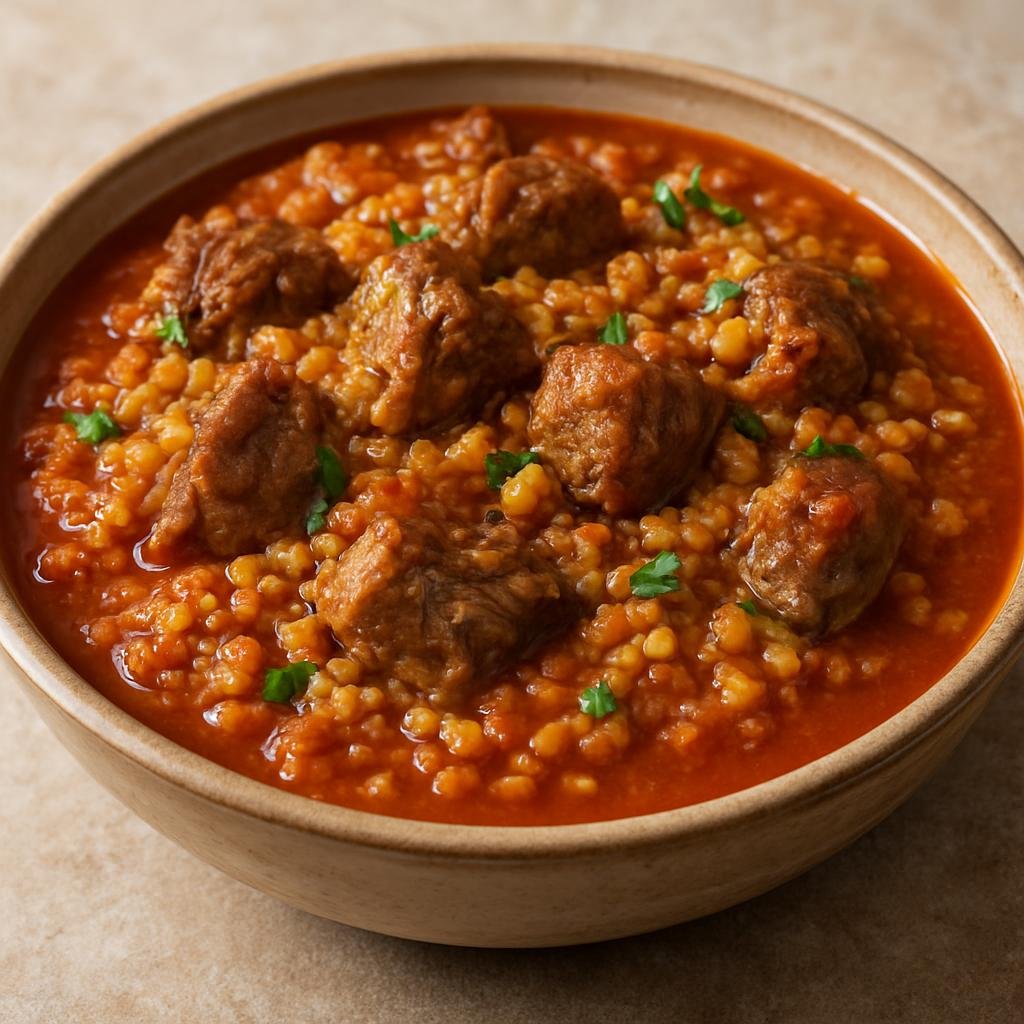
Serving Size: 4
Approximate Time
Prep
15 min
Cook
1 hr 35 min
Additional
5 min
Total
1 hr 50 min
Ingredients
- 2 lb (900 g) lamb shoulder, trimmed and cut into 1-inch (2.5 cm) cubes
- 2 tbsp (30 ml) vegetable oil or sunflower oil
- 2 medium onions, about 10 oz (285 g) total, finely chopped
- 3 garlic cloves, minced
- 2 tbsp (30 ml) tomato paste
- 14 oz (400 g) canned crushed tomatoes
- 1 cup (170 g) fine bulgur wheat
- 3 cups (720 ml) beef or lamb stock (or water)
- 1 tsp (5 g) sweet paprika
- 1/2 tsp (1 g) ground cumin
- 1 tsp (5 g) fine salt, more to taste
- 1/2 tsp (1 g) freshly ground black pepper
- 2 tbsp (30 ml) chopped fresh parsley
- 1 tbsp (15 ml) chopped fresh mint
- Pomegranate seeds for garnish (optional)
Instructions
1. Step 1: Heat oil in a heavy Dutch oven over medium-high heat; season lamb cubes lightly with salt and brown in batches until well caramelized, about 5–7 minutes per batch; remove and set aside.
2. Step 2: Reduce heat to medium, add chopped onions to the same pot and cook until softened and beginning to brown, about 8–10 minutes; add garlic and cook 1 minute more.
3. Step 3: Stir in tomato paste and spices (paprika, cumin) and cook 1–2 minutes to develop flavor, then add the crushed tomatoes and return the lamb to the pot.
4. Step 4: Pour in the stock, bring to a gentle simmer, cover partially, and cook over low heat until lamb is tender, about 1 to 1 1/4 hours.
5. Step 5: Once lamb is tender, stir in the bulgur, adjust seasoning with salt and pepper, and simmer uncovered 15–20 minutes until bulgur is cooked and has absorbed much of the sauce; add a little extra stock or water if needed for desired consistency.
6. Step 6: Remove from heat, stir in chopped parsley and mint, and let rest 5 minutes before serving.
7. Step 7: Serve hot, garnished with pomegranate seeds if using, alongside flatbread or plain yogurt.
Estimated Nutritional Information*
Per serving | Servings: 4
Calories: 882 kcal
Carbohydrates: 50.1 g
Protein: 46.2 g
Fat: 56.4 g
Saturated fat: 22.2 g
Cholesterol: 162 mg
Fiber: 9.5 g
Sodium: 1294 mg
Potassium: 1243 mg
Calcium: 127 mg
Iron: 6.93 mg
Vitamin A: 59 µg RAE
Vitamin C: 19.7 mg
Vitamin D: 0.2 µg
Generated: 2026-11-05T19:47:03+00:00
*Values are estimates based on USDA data and mathematical calculations. Actual values may vary. Where data are unavailable, those contributions are excluded. Calories, Carbohydrates, Protein, Fat, Saturated fat, Cholesterol, Fiber, Sodium, Potassium, Calcium, Iron, Vitamin A, Vitamin C and Vitamin D are known subtotals. Missing contributions are unknown, not zero.