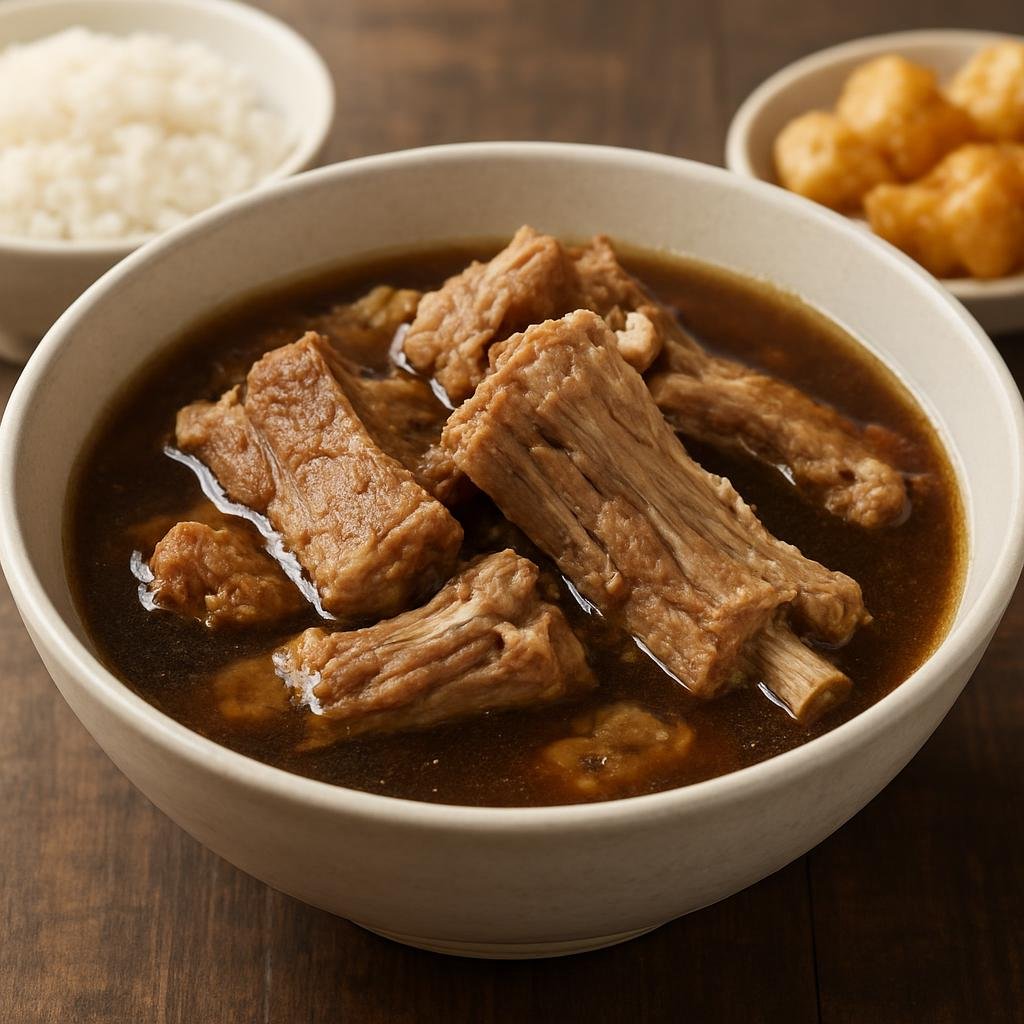
Entree: Malaysia – Malaysian Chinese – 排骨茶 ➤ pái gǔ chá (Pork rib soup braised in a peppery herbal broth)
Food safety reminder: Follow safe food-handling practices and use a food thermometer to verify safe internal cooking temperatures.
Ingredients
U.S. measurements first, metric equivalents in parentheses. Conversions are approximate; oz means weight ounces, not fluid ounces.
- 2 lb (900 g) pork spare ribs, bone-in, cut into individual ribs
- 8 cups (1.9 L) water
- 1 (0.705 to 7/8 oz (20–25 g)) bak kut teh herb sachet (commercial mix of angelica, dang shen, star anise, cinnamon, cloves, and other herbs) (about 0.705 to 7/8 oz (20–25 g))
- 10 cloves garlic, smashed (approx. 1 7/16 oz (40 g))
- 3 tbsp (45 ml) light soy sauce
- 1 tbsp (15 ml) dark soy sauce
- 1 tsp (5 g) rock sugar or granulated sugar
- 1 tsp (5 g) whole white peppercorns, lightly crushed
- 1 tsp (5 g) ground white pepper (adjust to taste)
- 2 slices fresh ginger (about 0.35 oz (10 g))
- 2 stalks green onion, cut into 2-inch (5 cm) lengths (for cooking) (approx. 11/16 oz (20 g))
- 2 tbsp (30 ml) vegetable oil
- Kosher salt to taste
- Fresh cilantro leaves for garnish (optional)
- Sliced red chilies or sambal for serving (optional)
- Steamed jasmine rice or Chinese dough fritters (youtiao) for serving (no measurement)
Show original ingredient measurements
- 2 lb (900 g) pork spare ribs, bone-in, cut into individual ribs
- 8 cups (1.9 L) water
- 1 (20–25 g) bak kut teh herb sachet (commercial mix of angelica, dang shen, star anise, cinnamon, cloves, and other herbs) (about 20–25 g)
- 10 cloves garlic, smashed (approx. 40 g)
- 3 tbsp (45 ml) light soy sauce
- 1 tbsp (15 ml) dark soy sauce
- 1 tsp (5 g) rock sugar or granulated sugar
- 1 tsp (5 g) whole white peppercorns, lightly crushed
- 1 tsp (5 g) ground white pepper (adjust to taste)
- 2 slices fresh ginger (about 10 g)
- 2 stalks green onion, cut into 2-inch (5 cm) lengths (for cooking) (approx. 20 g)
- 2 tbsp (30 ml) vegetable oil
- Kosher salt to taste
- Fresh cilantro leaves for garnish (optional)
- Sliced red chilies or sambal for serving (optional)
- Steamed jasmine rice or Chinese dough fritters (youtiao) for serving (no measurement)
Instructions
U.S. measurements first, metric equivalents in parentheses. Conversions are approximate.
1. Blanch the ribs: In a large pot, bring 8 cups (1.9 L) water to a boil. Add the pork ribs and boil 3 minutes to remove impurities. Drain and rinse the ribs under warm water; discard the blanching liquid.
2. Brown aromatics: In the cleaned pot, heat 2 tbsp (30 ml) vegetable oil over medium heat. Add smashed garlic and ginger slices and cook until fragrant, about 1–2 minutes, taking care not to burn.
3. Combine and simmer: Return the blanched ribs to the pot. Add the bak kut teh herb sachet (about 0.705 to 7/8 oz (20–25 g)), crushed white peppercorns, 3 tbsp (45 ml) light soy sauce, 1 tbsp (15 ml) dark soy sauce, 1 tsp (5 g) rock sugar, green onion stalks, and 8 cups (1.9 L) fresh water. Bring to a gentle boil, then reduce heat to low to maintain a bare simmer.
4. Cook slowly: Cover and simmer for 1 to 1 1/2 hours until ribs are tender and broth is richly flavored. Skim foam or excess oil from the surface as needed.
5. Season and finish: Taste and adjust seasoning with kosher salt and additional ground white pepper (about 1 tsp (5 g)) if you prefer a more peppery soup. Remove herb sachet and ginger slices before serving.
6. Serve: Ladle hot Bak Kut Teh into bowls, garnish with fresh cilantro and sliced red chilies or a dollop of sambal if desired. Serve immediately with steamed jasmine rice or youtiao.
Show original instructions
1. Blanch the ribs: In a large pot, bring 8 cups (1.9 L) water to a boil. Add the pork ribs and boil 3 minutes to remove impurities. Drain and rinse the ribs under warm water; discard the blanching liquid.
2. Brown aromatics: In the cleaned pot, heat 2 tbsp (30 ml) vegetable oil over medium heat. Add smashed garlic and ginger slices and cook until fragrant, about 1–2 minutes, taking care not to burn.
3. Combine and simmer: Return the blanched ribs to the pot. Add the bak kut teh herb sachet (about 20–25 g), crushed white peppercorns, 3 tbsp (45 ml) light soy sauce, 1 tbsp (15 ml) dark soy sauce, 1 tsp (5 g) rock sugar, green onion stalks, and 8 cups (1.9 L) fresh water. Bring to a gentle boil, then reduce heat to low to maintain a bare simmer.
4. Cook slowly: Cover and simmer for 1 to 1 1/2 hours until ribs are tender and broth is richly flavored. Skim foam or excess oil from the surface as needed.
5. Season and finish: Taste and adjust seasoning with kosher salt and additional ground white pepper (about 1 tsp / 5 g) if you prefer a more peppery soup. Remove herb sachet and ginger slices before serving.
6. Serve: Ladle hot Bak Kut Teh into bowls, garnish with fresh cilantro and sliced red chilies or a dollop of sambal if desired. Serve immediately with steamed jasmine rice or youtiao.
Per serving | Servings: 4
Generated: 2026-11-05T22:14:07+00:00
*Values are estimates based on USDA data and mathematical calculations. Actual values may vary. Where data are unavailable, those contributions are excluded. Calories, Carbohydrates, Protein, Fat, Saturated fat, Cholesterol, Fiber, Sodium, Potassium, Calcium, Iron, Vitamin A, Vitamin C and Vitamin D are known subtotals. Missing contributions are unknown, not zero.