Entree: Svalbard and Jan Mayen – Northern Culinary Region – Cod Tongues (Pan-fried tender pieces of cod, traditionally small head or cheek portions, served simply with buttered potatoes and lemon)
Food safety reminder: Follow safe food-handling practices and use a food thermometer to verify safe internal cooking temperatures.
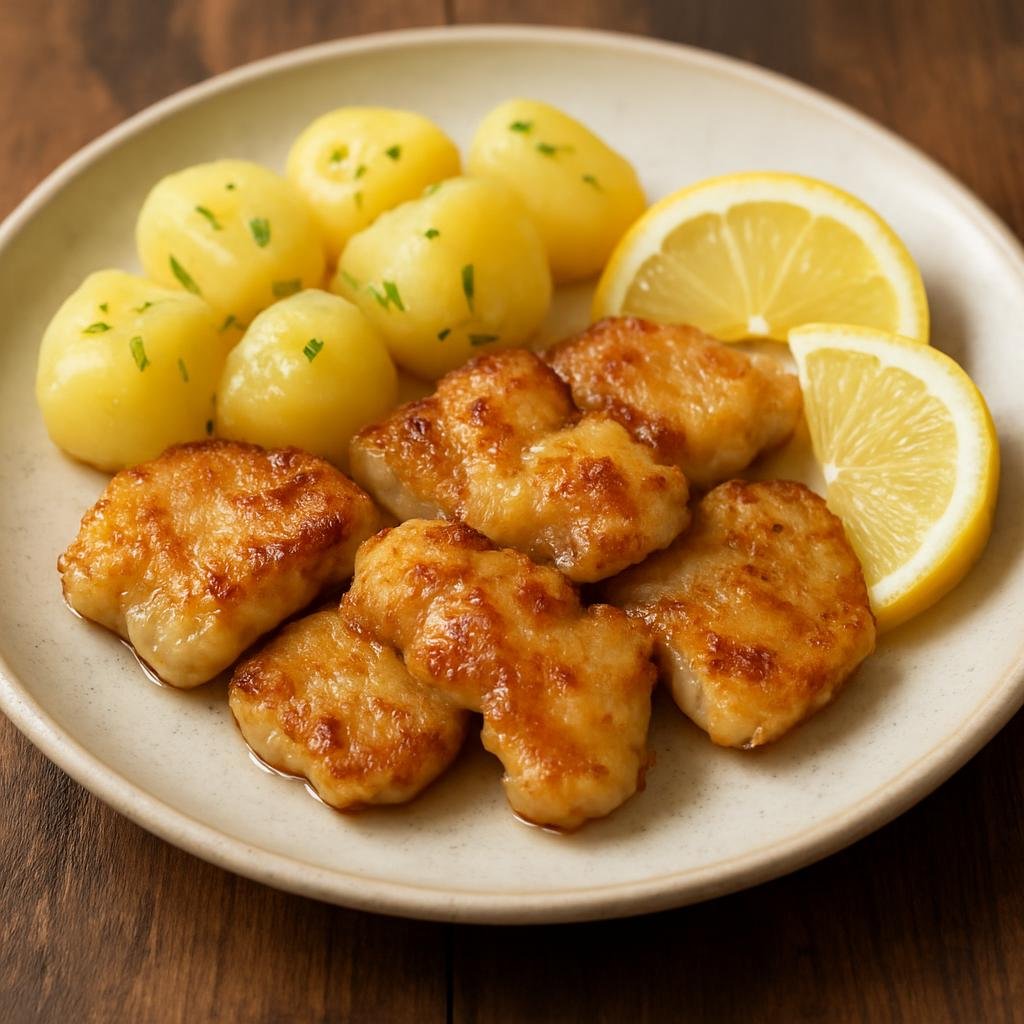
Serving Size: 4
Approximate Time
Prep
10 min
Cook
20 min
Total
30 min
Ingredients
- 12 cod tongues or small cod cheek pieces, approx. 1 lb (450 g)
- 1 lb (450 g) small new potatoes or baby potatoes
- 3/4 cup (90 g) all-purpose flour
- 1 tsp (5 g) fine sea salt, plus more to taste
- 1/2 tsp (2.5 g) black pepper
- 2 tbsp (30 ml) vegetable oil
- 4 tbsp (60 g) unsalted butter
- 2 tbsp (30 ml) lemon juice (about 1 lemon)
- 2 tbsp (30 g) cold unsalted butter, cubed (to finish sauce)
- 2 tbsp (8 g) fresh parsley, chopped
- Lemon wedges, for serving
Instructions
1. Place the new potatoes in a pot of salted water and simmer until tender, about 12–15 minutes. Drain and keep warm; if desired, toss with 1 tbsp (15 g) butter and chopped parsley.
2. Pat the cod tongues dry and season with 1/2 tsp (2.5 g) salt and the black pepper. Put the flour and remaining 1/2 tsp (2.5 g) salt in a shallow dish and dredge each piece lightly, shaking off excess.
3. Heat the oil and 2 tbsp (30 g) butter in a large skillet over medium-high heat until foaming. Add the dredged cod tongues in a single layer and cook until golden and crisp, about 2–3 minutes per side depending on size.
4. Transfer the fried cod tongues to a warm plate. Lower heat to medium, add the cubed cold butter to the pan and swirl to make a glossy browned-butter pan sauce; add lemon juice and adjust seasoning with salt.
5. Serve the cod tongues immediately with buttered new potatoes, spoon the browned-butter lemon sauce over the fish, garnish with parsley, and offer lemon wedges at the table.
Estimated Nutritional Information*
Per serving | Servings: 4
Calories: 394 kcal
Carbohydrates: 37.9 g
Protein: 5 g
Fat: 25.4 g
Saturated fat: 12.5 g
Cholesterol: 48 mg
Fiber: 3.2 g
Sugar: 1.2 g
Sodium: 495 mg
Potassium: 535 mg
Calcium: 29 mg
Iron: 2.16 mg
Vitamin A: 162 µg RAE
Vitamin C: 27.8 mg
Generated: 2026-11-05T19:46:17+00:00
*Values are estimates based on USDA data and mathematical calculations. Actual values may vary. Where data are unavailable, those contributions are excluded. Calories, Carbohydrates, Protein, Fat, Saturated fat, Cholesterol, Fiber, Sugar, Sodium, Potassium, Calcium, Iron, Vitamin A and Vitamin C are known subtotals. Missing contributions are unknown, not zero.