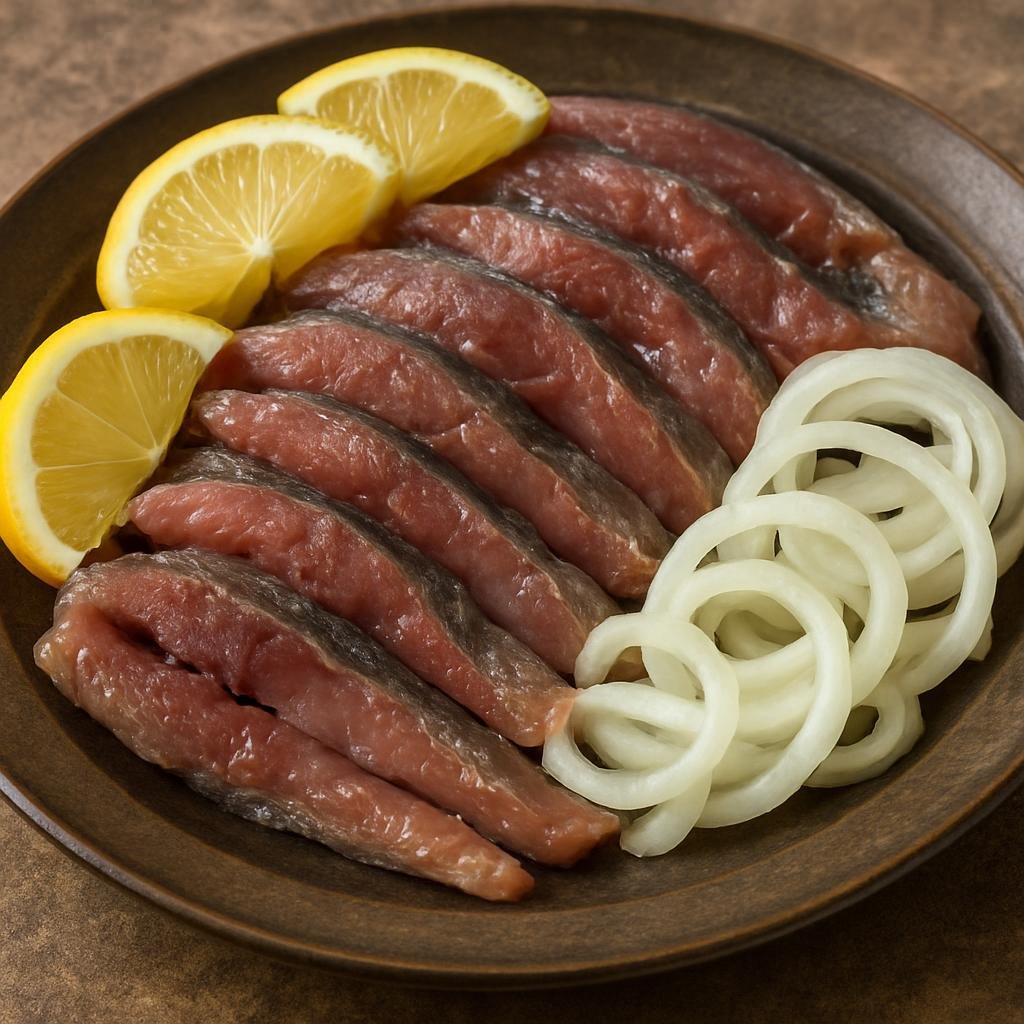
Entree: Egypt – Cairo & Delta – فسيخ ➤ feseekh (Salt-preserved, fermented grey mullet traditionally aged and served sliced with lemon and onions)
Food safety reminder: Follow safe food-handling practices and use a food thermometer to verify safe internal cooking temperatures.
Serving Size: 4
Approximate Time
Prep
1 hr
Cook
0 min
Additional
72 hrs
Total
73 hrs
Ingredients
U.S. measurements first, metric equivalents in parentheses. Conversions are approximate; oz means weight ounces, not fluid ounces.
- 4 whole grey mullet (feseekh), approx. 10 oz (280 g) each, gutted or left whole per local tradition (see instructions)
- 8 cups (1.6 kg) coarse sea salt (enough to thoroughly pack the fish)
- 2 tbsp (12 g) roasted coriander seeds, lightly crushed
- 1 tbsp (6 g) roasted cumin seeds, lightly crushed
- 4 bay leaves
- 1 tsp (2 g) whole black peppercorns
- 8 cups (2 L) cold water for soaking and desalting
- 4 lemons for serving (about 8 oz (240 g) total), cut into wedges
- 1 bunch (about 6 oz (170 g)) green onions, trimmed and washed
- 4 flatbreads or baladi loaves, for serving (approx. 6 oz (170 g) each)
Show original ingredient measurements
- 4 whole grey mullet (feseekh), approx. 10 oz (280 g) each, gutted or left whole per local tradition (see instructions)
- 8 cups (1.6 kg) coarse sea salt (enough to thoroughly pack the fish)
- 2 tbsp (12 g) roasted coriander seeds, lightly crushed
- 1 tbsp (6 g) roasted cumin seeds, lightly crushed
- 4 bay leaves
- 1 tsp (2 g) whole black peppercorns
- 8 cups (2 L) cold water for soaking and desalting
- 4 lemons for serving (about 8 oz / 240 g total), cut into wedges
- 1 bunch (about 6 oz / 170 g) green onions, trimmed and washed
- 4 flatbreads or baladi loaves, for serving (approx. 6 oz / 170 g each)
Instructions
1. Traditional prep: rinse whole mullet under cold water and, if preferred for safety, remove viscera and bloodline while keeping skin and scales intact; pat dry. (Note: traditional methods vary; follow local practice and food-safety guidance.)
2. In a bowl, combine crushed roasted coriander, crushed roasted cumin, bay leaves, and peppercorns. Rub a thin layer of this spice mix inside each fish cavity and lightly on the skin.
3. In a large nonreactive container or ceramic crock, spread a 1–inch layer of coarse sea salt. Place the first layer of fish on the salt, then cover each fish completely with more coarse salt; repeat until all fish are tightly packed and fully buried in salt. Sprinkle remaining whole spices between layers.
4. Cover the container loosely (allow slight airflow) and store in a cool, shaded place. Ferment for 10–21 days depending on ambient temperature and desired intensity; check occasionally to ensure fish remain fully covered and dry. (Longer aging yields stronger flavor; maintain cool conditions to reduce spoilage risk.)
5. After fermentation, remove fish from salt and brush off excess; transfer fish to a large container and soak in cold water for 6–12 hours, changing the water every 2–3 hours until the fish reaches a palatable salt level.
6. Once desalinated to taste, clean the fish exterior, slit open and remove any remaining guts if not removed earlier, then rinse well. Some households sun-dry lightly for 1 day after desalting to firm the flesh.
7. To serve, fillet or slice the feseekh thinly. Arrange slices on a platter with lemon wedges and green onions. Serve with baladi bread; diners squeeze lemon over slices and accompany with raw green onions or mild chiles.
8. Consume within a day or two of desalting and slicing. Because feseekh is a preserved fermented product, follow safe handling, and when in doubt or if off-odors arise, discard.
Estimated Nutritional Information*
Per serving | Servings: 4
Calories: 47 kcal
Carbohydrates: 11.5 g
Protein: 2.1 g
Fat: 1.2 g
Saturated fat: 0.1 g
Fiber: 4.4 g
Sodium: 155063 mg
Potassium: 305 mg
Calcium: 196 mg
Iron: 3.93 mg
Vitamin A: 24 µg RAE
Vitamin C: 40.6 mg
Generated: 2026-11-05T19:44:37+00:00
*Values are estimates based on USDA data and mathematical calculations. Actual values may vary. Where data are unavailable, those contributions are excluded. Calories, Carbohydrates, Protein, Fat, Saturated fat, Fiber, Sodium, Potassium, Calcium, Iron, Vitamin A and Vitamin C are known subtotals. Missing contributions are unknown, not zero.