Entree: Republic of the Congo – National Cuisine – Ntaba (Braised goat stew in palm oil with tomato, ginger, and leafy greens)
Food safety reminder: Follow safe food-handling practices and use a food thermometer to verify safe internal cooking temperatures.
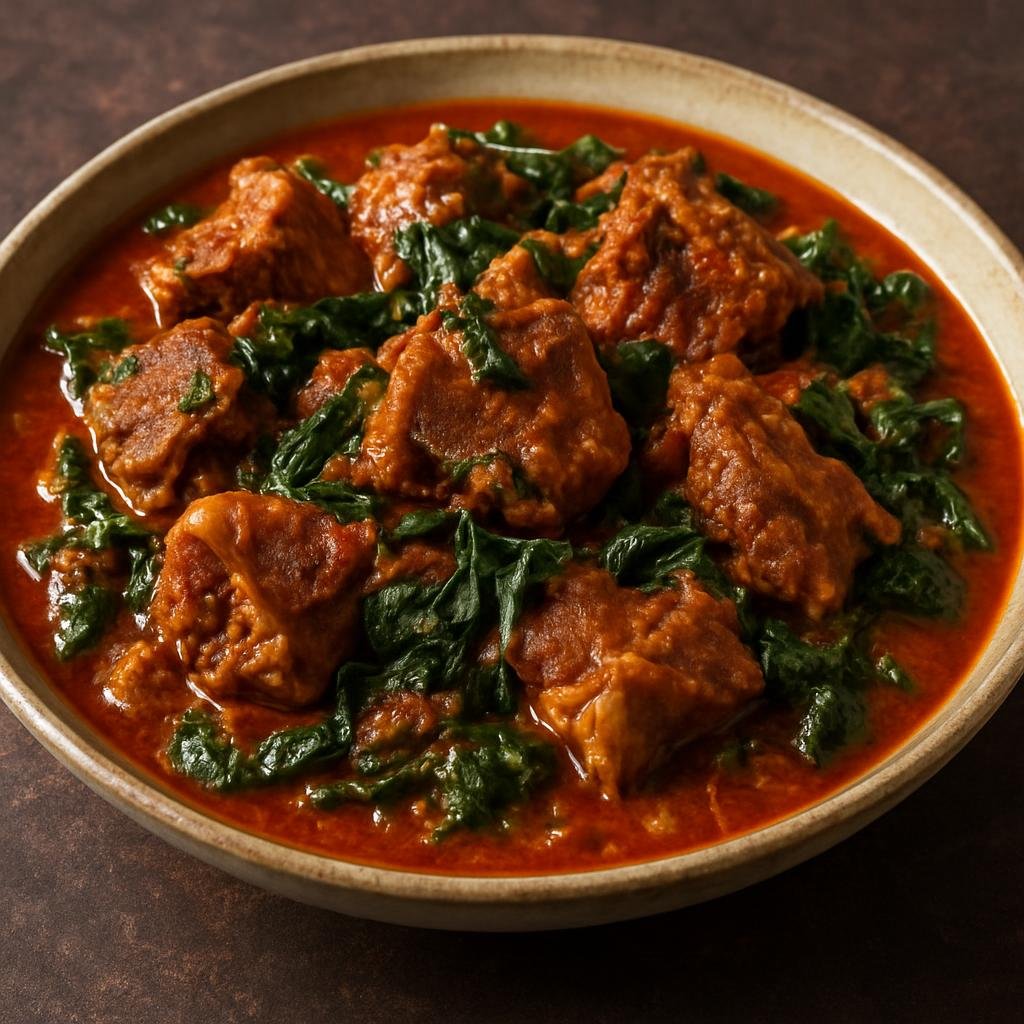
Serving Size: 4
Approximate Time
Prep
15 min
Cook
2 hrs
Total
2 hrs 15 min
Ingredients
U.S. measurements first, metric equivalents in parentheses. Conversions are approximate; oz means weight ounces, not fluid ounces.
- 2 lb (900 g) goat shoulder, trimmed and cut into 1–1.5 inch (2.54 to 3.81 cm) pieces
- 2 tsp (10 g) salt, divided
- 1 tsp (2 g) ground black pepper
- 3 tbsp (45 ml) red palm oil
- 1 tbsp (15 ml) vegetable oil
- 1 large onion, chopped, approx. 8 oz (225 g)
- 3 cloves garlic, minced, approx. 0.5 oz (15 g)
- 1 tbsp (6 g) fresh ginger, minced
- 3 medium tomatoes, chopped, approx. 14 oz (400 g)
- 1 tbsp (15 ml) tomato paste
- 1 scotch bonnet pepper, whole or chopped (to taste)
- 1 cup (240 ml) beef or chicken stock
- 1 tsp (1 g) dried thyme or 2 sprigs fresh thyme
- 2 bay leaves
- 2 tbsp (30 g) unsweetened ground peanut or natural peanut butter
- 1 cup (150 g) chopped cassava leaves or spinach
- 1 tbsp (15 ml) fresh lime juice
Show original ingredient measurements
- 2 lb (900 g) goat shoulder, trimmed and cut into 1–1.5 inch pieces
- 2 tsp (10 g) salt, divided
- 1 tsp (2 g) ground black pepper
- 3 tbsp (45 ml) red palm oil
- 1 tbsp (15 ml) vegetable oil
- 1 large onion, chopped, approx. 8 oz (225 g)
- 3 cloves garlic, minced, approx. 0.5 oz (15 g)
- 1 tbsp (6 g) fresh ginger, minced
- 3 medium tomatoes, chopped, approx. 14 oz (400 g)
- 1 tbsp (15 ml) tomato paste
- 1 scotch bonnet pepper, whole or chopped (to taste)
- 1 cup (240 ml) beef or chicken stock
- 1 tsp (1 g) dried thyme or 2 sprigs fresh thyme
- 2 bay leaves
- 2 tbsp (30 g) unsweetened ground peanut or natural peanut butter
- 1 cup (150 g) chopped cassava leaves or spinach
- 1 tbsp (15 ml) fresh lime juice
Instructions
U.S. measurements first, metric equivalents in parentheses. Conversions are approximate.
1. Season the goat pieces with 1 tsp (5 ml) salt and black pepper. In a large heavy pot over medium-high heat, heat the vegetable oil and 1 tbsp (15 ml) palm oil; brown the goat in batches until well colored on all sides, then remove and set aside.
2. Add the remaining palm oil to the pot. Reduce heat to medium, add the chopped onion and sauté until softened, about 5–7 minutes. Stir in garlic and ginger and cook 1 minute until fragrant.
3. Stir in tomato paste and chopped tomatoes and cook 3–4 minutes. Add the scotch bonnet pepper, thyme, bay leaves, peanut (or peanut butter), and the remaining 1 tsp (5 ml) salt; return the browned goat to the pot.
4. Pour in the stock, bring to a gentle boil, then reduce heat, cover partially, and simmer for 1 to 1 1/2 hours until the goat is tender, stirring occasionally and adding a splash more stock or water if the sauce reduces too far.
5. When the goat is tender, stir in the chopped cassava leaves or spinach and simmer uncovered 10–15 minutes until the greens are wilted and the sauce has thickened. Adjust salt and pepper, stir in lime juice, and remove bay leaves before serving.
Show original instructions
1. Season the goat pieces with 1 tsp salt and black pepper. In a large heavy pot over medium-high heat, heat the vegetable oil and 1 tbsp palm oil; brown the goat in batches until well colored on all sides, then remove and set aside.
2. Add the remaining palm oil to the pot. Reduce heat to medium, add the chopped onion and sauté until softened, about 5–7 minutes. Stir in garlic and ginger and cook 1 minute until fragrant.
3. Stir in tomato paste and chopped tomatoes and cook 3–4 minutes. Add the scotch bonnet pepper, thyme, bay leaves, peanut (or peanut butter), and the remaining 1 tsp salt; return the browned goat to the pot.
4. Pour in the stock, bring to a gentle boil, then reduce heat, cover partially, and simmer for 1 to 1 1/2 hours until the goat is tender, stirring occasionally and adding a splash more stock or water if the sauce reduces too far.
5. When the goat is tender, stir in the chopped cassava leaves or spinach and simmer uncovered 10–15 minutes until the greens are wilted and the sauce has thickened. Adjust salt and pepper, stir in lime juice, and remove bay leaves before serving.
Estimated Nutritional Information*
Per serving | Servings: 4
Calories: 490 kcal
Carbohydrates: 18.3 g
Protein: 52 g
Fat: 23.5 g
Fiber: 4.9 g
Sodium: 1330 mg
Potassium: 1428 mg
Calcium: 151 mg
Iron: 9.37 mg
Vitamin A: 181 µg RAE
Vitamin C: 35.1 mg
Nutrition estimated: November 5, 2026
*Values are estimates based on USDA data and mathematical calculations. Actual values may vary. Where data are unavailable, those contributions are excluded.