Entree: Cook Islands – Central Culinary Region – Umukai (Traditional earth oven roast of pork, taro, and breadfruit)
Food safety reminder: Follow safe food-handling practices and use a food thermometer to verify safe internal cooking temperatures.
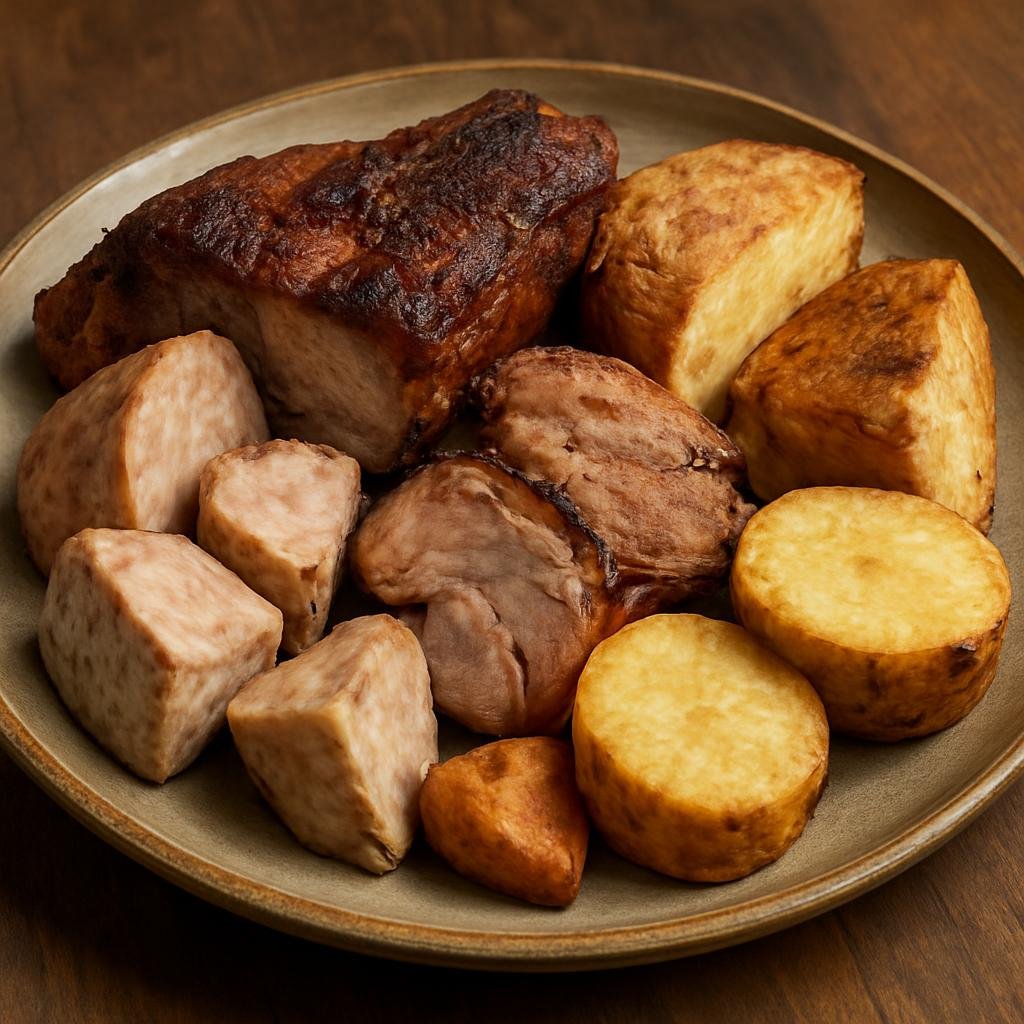
Serving Size: 6
Approximate Time
Prep
20 min
Cook
2 hrs 30 min
Total
2 hrs 50 min
Ingredients
- 3 lb (1.36 kg) pork shoulder, cut into 8–10 pieces, approx. 6 oz (170 g) each
- 2 tsp (10 g) sea salt
- 1 tsp (4 g) freshly ground black pepper
- 3 cloves garlic, minced
- 1 tbsp (15 ml) fresh ginger, grated
- 2 tbsp (30 ml) soy sauce
- 1 tbsp (15 ml) brown sugar
- 1 large breadfruit or jackfruit substitute, peeled and cut into 1-inch (2.5 cm) wedges, about 2–3 lb (900–1350 g)
- 2 lb (900 g) taro, scrubbed and halved if large
- 2 cups (480 ml) coconut cream
- 1 large onion, quartered
- 2 tbsp (30 ml) coconut oil or vegetable oil
- 2 bay leaves
- 2 bunches of banana leaves or large collard leaves for wrapping, or heavy-duty aluminum foil
- 1 lime, cut into wedges, for serving
- Fresh chopped parsley or chopped fresh island herbs for garnish
Instructions
U.S. measurements first, metric equivalents in parentheses. Conversions are approximate.
1. Marinate the pork: in a large bowl combine garlic, ginger, soy sauce, brown sugar, salt, and pepper. Add pork pieces and toss to coat. Cover and refrigerate at least 1 hour or overnight.
2. Preheat your oven to 375°F (190°C). If using a charcoal grill or oven-roasted method to mimic an umu, prepare for indirect heat and a covered environment.
3. Prepare wrapping: if using banana leaves, wilt them briefly over a low flame or in the oven to make pliable. Lay a double layer of banana leaf or a sheet of heavy foil on a work surface.
4. Layer the ingredients: place a few breadfruit wedges and taro pieces in the center of the leaf or foil, add a quartered onion and a bay leaf, then place marinated pork pieces on top. Drizzle 1/2 cup (120 ml) coconut cream and a teaspoon (1 tsp (5 ml)) of coconut oil over the stack.
5. Fold the banana leaf or foil snugly to make a sealed parcel. Repeat to make two large parcels or three medium parcels to fit your baking dish.
6. Place parcels in a deep baking dish or roasting pan, cover the pan tightly with foil, and roast in the preheated oven for 2 to 2 1/2 hours, until pork is tender and taro is cooked through. For a smokier umu note, uncover for the last 15 minutes to brown slightly.
7. Carefully open parcels (steam will escape). Transfer contents to a large platter, spoon remaining cooking juices over the meat and vegetables, and garnish with chopped herbs. Serve with lime wedges.
Show original instructions
1. Marinate the pork: in a large bowl combine garlic, ginger, soy sauce, brown sugar, salt, and pepper. Add pork pieces and toss to coat. Cover and refrigerate at least 1 hour or overnight.
2. Preheat your oven to 375°F (190°C). If using a charcoal grill or oven-roasted method to mimic an umu, prepare for indirect heat and a covered environment.
3. Prepare wrapping: if using banana leaves, wilt them briefly over a low flame or in the oven to make pliable. Lay a double layer of banana leaf or a sheet of heavy foil on a work surface.
4. Layer the ingredients: place a few breadfruit wedges and taro pieces in the center of the leaf or foil, add a quartered onion and a bay leaf, then place marinated pork pieces on top. Drizzle 1/2 cup (120 ml) coconut cream and a teaspoon (5 ml) of coconut oil over the stack.
5. Fold the banana leaf or foil snugly to make a sealed parcel. Repeat to make two large parcels or three medium parcels to fit your baking dish.
6. Place parcels in a deep baking dish or roasting pan, cover the pan tightly with foil, and roast in the preheated oven for 2 to 2 1/2 hours, until pork is tender and taro is cooked through. For a smokier umu note, uncover for the last 15 minutes to brown slightly.
7. Carefully open parcels (steam will escape). Transfer contents to a large platter, spoon remaining cooking juices over the meat and vegetables, and garnish with chopped herbs. Serve with lime wedges.
Estimated Nutritional Information*
Per serving | Servings: 6
Calories: 1939 kcal
Carbohydrates: 12.5 g
Protein: 120.7 g
Fat: 154.7 g
Saturated fat: 70.8 g
Cholesterol: 483 mg
Fiber: 2.8 g
Sodium: 1387 mg
Potassium: 2407 mg
Calcium: 131 mg
Iron: 9.31 mg
Vitamin A: 14 µg RAE
Vitamin C: 12.6 mg
Vitamin D: 11.6 µg
Generated: 2026-11-06T05:27:07+00:00
*Values are estimates based on USDA data and mathematical calculations. Actual values may vary. Where data are unavailable, those contributions are excluded. Calories, Carbohydrates, Protein, Fat, Saturated fat, Cholesterol, Fiber, Sodium, Potassium, Calcium, Iron, Vitamin A, Vitamin C and Vitamin D are known subtotals. Missing contributions are unknown, not zero.