Entree: Ethiopia – Addis Ababa – ክትፎ Kitfo (minced seasoned raw beef)
Food safety reminder: Follow safe food-handling practices and use a food thermometer to verify safe internal cooking temperatures.
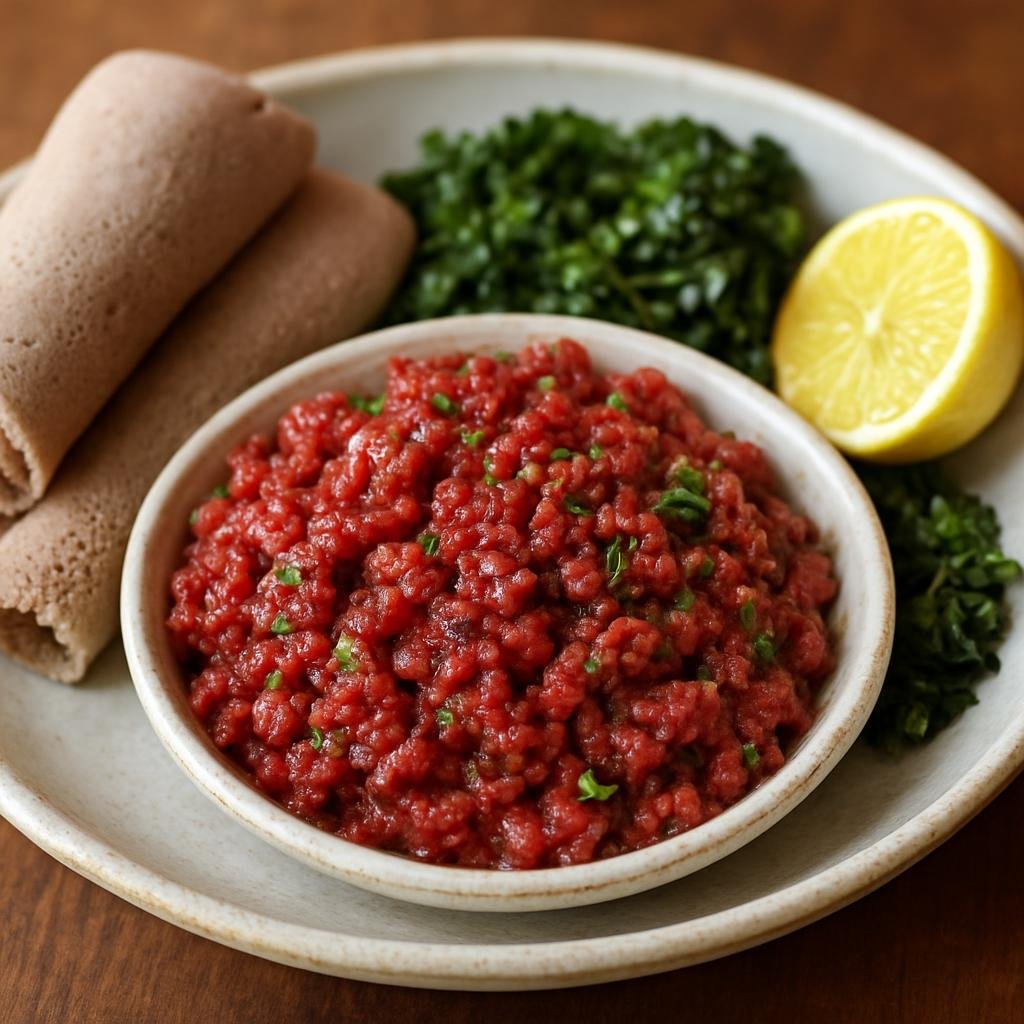
Ingredients
U.S. measurements first, metric equivalents in parentheses. Conversions are approximate; oz means weight ounces, not fluid ounces.
- 1 lb (454 g) lean beef (preferably sirloin or top round), finely minced with a knife
- 3 tbsp (45 ml) niter kibbeh (spiced clarified butter) — see note in instructions if making from scratch
- 1–2 tsp (4–8 g) mitmita spice blend (adjust to heat preference)
- 1 tsp (5 g) kosher salt, or to taste
- 1 small garlic clove, finely minced — about 0.106 oz (3 g) (optional)
- 1 tbsp (15 ml) fresh lemon juice (optional, for serving)
- 4 pieces injera or kocho for serving (no measurement required)
- 1 cup (250 g) ayib (Ethiopian fresh cheese) or crumbled mild cottage cheese for serving (optional)
- 1 cup (200 g) cooked, lightly spiced greens (gomen) for serving (optional)
Show original ingredient measurements
- 1 lb (454 g) lean beef (preferably sirloin or top round), finely minced with a knife
- 3 tbsp (45 ml) niter kibbeh (spiced clarified butter) — see note in instructions if making from scratch
- 1–2 tsp (4–8 g) mitmita spice blend (adjust to heat preference)
- 1 tsp (5 g) kosher salt, or to taste
- 1 small garlic clove, finely minced — about 3 g (optional)
- 1 tbsp (15 ml) fresh lemon juice (optional, for serving)
- 4 pieces injera or kocho for serving (no measurement required)
- 1 cup (250 g) ayib (Ethiopian fresh cheese) or crumbled mild cottage cheese for serving (optional)
- 1 cup (200 g) cooked, lightly spiced greens (gomen) for serving (optional)
Instructions
U.S. measurements first, metric equivalents in parentheses. Conversions are approximate.
1. If you do not have prepared niter kibbeh, gently warm 3 tbsp (45 ml) unsalted butter with 1/4 tsp (0.5 g) ground cardamom, a pinch of fenugreek, 1 small chopped shallot and a small clove of garlic over low heat until flavors infuse; strain and reserve the clarified spiced butter as niter kibbeh. Let cool slightly but keep warm.
2. Place the finely minced beef in a bowl. Add warm niter kibbeh (reserve 1 tsp (5 ml) to drizzle when serving if desired), mitmita, kosher salt, and minced garlic (if using). Mix thoroughly with a wooden spoon or by hand until well combined and slightly glossy; taste and adjust salt or mitmita.
3. For traditional kitfo leb leb (lightly warmed): briefly heat the seasoned beef in a skillet over very low heat for 1–2 minutes while stirring, just to take the chill off—do not cook through. For fully raw kitfo, serve immediately at room temperature.
4. Serve kitfo on a platter with injera or kocho, ayib (fresh cheese), and cooked gomen (greens). Offer lemon wedges if desired and eat by wrapping small portions in injera.
Show original instructions
1. If you do not have prepared niter kibbeh, gently warm 3 tbsp (45 ml) unsalted butter with 1/4 tsp (0.5 g) ground cardamom, a pinch of fenugreek, 1 small chopped shallot and a small clove of garlic over low heat until flavors infuse; strain and reserve the clarified spiced butter as niter kibbeh. Let cool slightly but keep warm.
2. Place the finely minced beef in a bowl. Add warm niter kibbeh (reserve 1 tsp/5 ml to drizzle when serving if desired), mitmita, kosher salt, and minced garlic (if using). Mix thoroughly with a wooden spoon or by hand until well combined and slightly glossy; taste and adjust salt or mitmita.
3. For traditional kitfo leb leb (lightly warmed): briefly heat the seasoned beef in a skillet over very low heat for 1–2 minutes while stirring, just to take the chill off—do not cook through. For fully raw kitfo, serve immediately at room temperature.
4. Serve kitfo on a platter with injera or kocho, ayib (fresh cheese), and cooked gomen (greens). Offer lemon wedges if desired and eat by wrapping small portions in injera.
Per serving | Servings: 4
Generated: 2026-11-06T05:02:58+00:00
*Values are estimates based on USDA data and mathematical calculations. Actual values may vary. Where data are unavailable, those contributions are excluded. Calories, Carbohydrates, Protein, Fat, Saturated fat, Cholesterol, Fiber, Sugar, Sodium, Potassium, Calcium, Iron, Vitamin A, Vitamin C and Vitamin D are known subtotals. Missing contributions are unknown, not zero.