Entree: Brazil – Amazonas – Pirarucu de Casaca (Pirarucu in a Coat)
Food safety reminder: Follow safe food-handling practices and use a food thermometer to verify safe internal cooking temperatures.
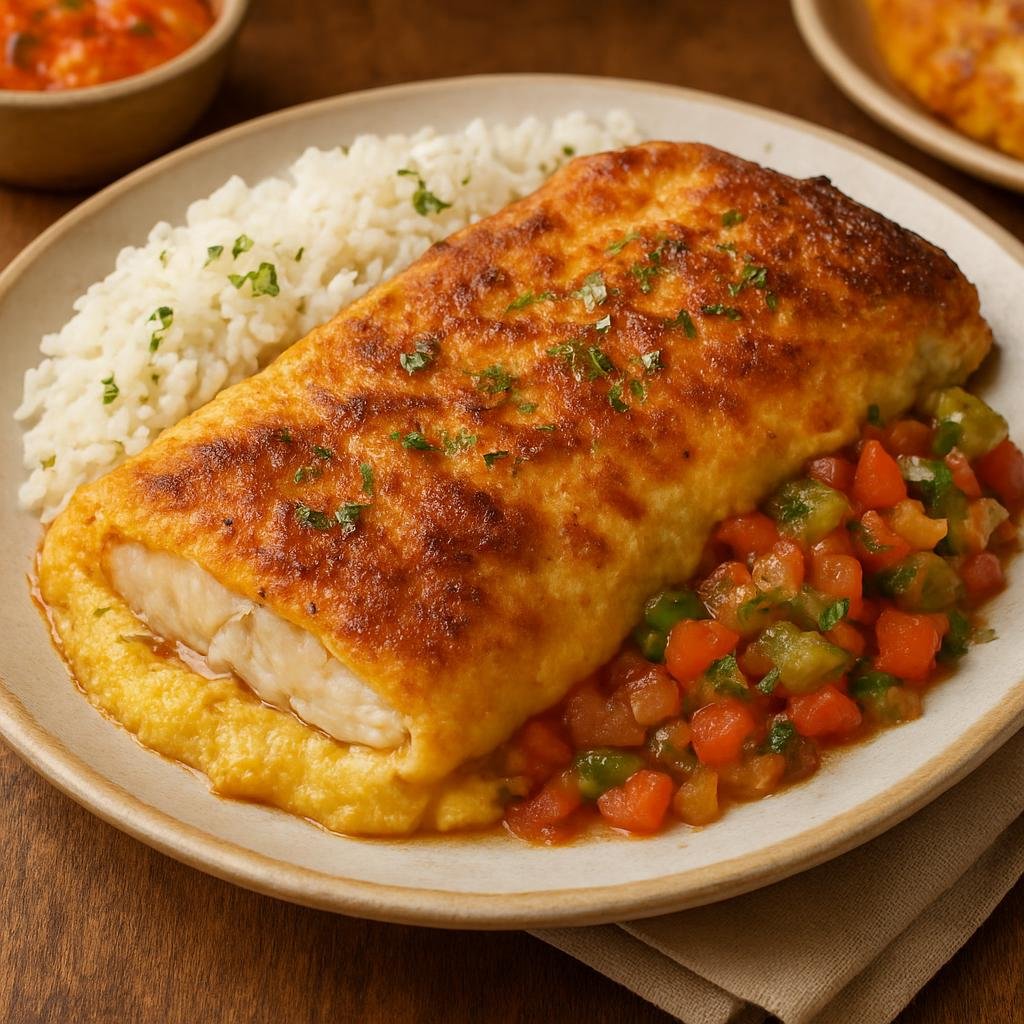
Serving Size: 6
Approximate Time
Prep
1 hr
Cook
35 min
Additional
15 min
Total
1 hr 50 min
Ingredients
U.S. measurements first, metric equivalents in parentheses. Conversions are approximate; oz means weight ounces, not fluid ounces.
- 2 pirarucu fillets, approx. 1 lb (450 g) each, salt-cured (or salted-and-dried arapaima)
- 4 cups (960 ml) cold water, plus extra for soaking
- 1/4 cup (60 ml) olive oil
- 2 tbsp (30 ml) butter
- 2 medium onions, approx. 10 oz (280 g), thinly sliced
- 4 cloves garlic, approx. 0.42 oz (12 g), minced
- 1 medium red bell pepper, approx. 6 oz (170 g), diced
- 3 medium tomatoes, approx. 14 oz (400 g), diced
- 1/2 cup (75 g) pitted black olives, sliced
- 3 large eggs, approx. 6 oz (170 g), beaten
- 3 hard-boiled eggs, approx. 6 oz (170 g), sliced for garnish
- 3 cups (360 g) farinha de mandioca (coarse manioc/cassava flour)
- 1/4 cup (15 g) chopped fresh cilantro
- 1/4 cup (15 g) chopped fresh parsley
- 2 tbsp (30 ml) lime juice
- 1 tsp (5 g) black pepper
- Salt to taste (use cautiously if using salt-cured pirarucu)
- Optional: 1 tbsp (15 ml) dendê (palm) oil for finishing (authentic regional touch)
Show original ingredient measurements
- 2 pirarucu fillets, approx. 1 lb (450 g) each, salt-cured (or salted-and-dried arapaima)
- 4 cups (960 ml) cold water, plus extra for soaking
- 1/4 cup (60 ml) olive oil
- 2 tbsp (30 ml) butter
- 2 medium onions, approx. 10 oz (280 g), thinly sliced
- 4 cloves garlic, approx. 12 g, minced
- 1 medium red bell pepper, approx. 6 oz (170 g), diced
- 3 medium tomatoes, approx. 14 oz (400 g), diced
- 1/2 cup (75 g) pitted black olives, sliced
- 3 large eggs, approx. 6 oz (170 g), beaten
- 3 hard-boiled eggs, approx. 6 oz (170 g), sliced for garnish
- 3 cups (360 g) farinha de mandioca (coarse manioc/cassava flour)
- 1/4 cup (15 g) chopped fresh cilantro
- 1/4 cup (15 g) chopped fresh parsley
- 2 tbsp (30 ml) lime juice
- 1 tsp (5 g) black pepper
- Salt to taste (use cautiously if using salt-cured pirarucu)
- Optional: 1 tbsp (15 ml) dendê (palm) oil for finishing (authentic regional touch)
Instructions
U.S. measurements first, metric equivalents in parentheses. Conversions are approximate.
1. Rinse the salt-cured pirarucu under cold water, then submerge in 4 cups (960 ml) cold water and refrigerate 12–24 hours, changing the water 2–3 times to desalt; taste a small piece to ensure salt level is correct.
2. Place the desalted pirarucu in a pot, cover with fresh water, bring to a simmer and poach gently 10–12 minutes until opaque and flaky; drain, let cool slightly, then remove skin and bones and flake the flesh into large pieces.
3. In a large skillet or pan, heat olive oil and butter over medium heat; add sliced onions and cook 8–10 minutes until soft and translucent. Add minced garlic and cook 1 minute more.
4. Add diced red pepper and tomatoes to the skillet and cook until softened and the mixture is slightly reduced, about 6–8 minutes; stir in olives, chopped cilantro and parsley, and lime juice; season lightly with pepper.
5. Add the flaked pirarucu to the vegetable mixture and toss gently to combine and warm through, breaking the fish into bite-sized pieces; adjust seasoning carefully for salt.
6. Pour beaten eggs over the fish-and-vegetable mixture and cook, stirring gently, until the eggs are set but still moist, about 2–3 minutes.
7. Remove from heat and fold in manioc flour a cup at a time until mixture holds together but is not dry — you may use slightly less or more flour depending on moisture (about 3 cups (360 g) total); let cool slightly.
8. Transfer half the mixture to a shallow baking dish, spread evenly, arrange sliced hard-boiled eggs over it, then top with remaining fish mixture to form a second layer; press lightly to compact.
9. If desired, drizzle with 1 tbsp (15 ml) dendê (palm) oil or a little extra olive oil; bake in a preheated 350°F (175°C) oven 15–20 minutes to set and lightly brown the top.
10. Serve hot, garnished with additional chopped parsley/cilantro and lime wedges; traditionally accompanied by fried plantains or white rice.
Show original instructions
1. Rinse the salt-cured pirarucu under cold water, then submerge in 4 cups (960 ml) cold water and refrigerate 12–24 hours, changing the water 2–3 times to desalt; taste a small piece to ensure salt level is correct.
2. Place the desalted pirarucu in a pot, cover with fresh water, bring to a simmer and poach gently 10–12 minutes until opaque and flaky; drain, let cool slightly, then remove skin and bones and flake the flesh into large pieces.
3. In a large skillet or pan, heat olive oil and butter over medium heat; add sliced onions and cook 8–10 minutes until soft and translucent. Add minced garlic and cook 1 minute more.
4. Add diced red pepper and tomatoes to the skillet and cook until softened and the mixture is slightly reduced, about 6–8 minutes; stir in olives, chopped cilantro and parsley, and lime juice; season lightly with pepper.
5. Add the flaked pirarucu to the vegetable mixture and toss gently to combine and warm through, breaking the fish into bite-sized pieces; adjust seasoning carefully for salt.
6. Pour beaten eggs over the fish-and-vegetable mixture and cook, stirring gently, until the eggs are set but still moist, about 2–3 minutes.
7. Remove from heat and fold in manioc flour a cup at a time until mixture holds together but is not dry — you may use slightly less or more flour depending on moisture (about 3 cups/360 g total); let cool slightly.
8. Transfer half the mixture to a shallow baking dish, spread evenly, arrange sliced hard-boiled eggs over it, then top with remaining fish mixture to form a second layer; press lightly to compact.
9. If desired, drizzle with 1 tbsp (15 ml) dendê (palm) oil or a little extra olive oil; bake in a preheated 350°F (175°C) oven 15–20 minutes to set and lightly brown the top.
10. Serve hot, garnished with additional chopped parsley/cilantro and lime wedges; traditionally accompanied by fried plantains or white rice.
Estimated Nutritional Information*
Per serving | Servings: 6
Calories: 644 kcal
Carbohydrates: 64.2 g
Protein: 37.9 g
Fat: 26.1 g
Fiber: 5.7 g
Sodium: 327 mg
Potassium: 1067 mg
Calcium: 244 mg
Iron: 7.02 mg
Generated: 2026-11-06T06:02:06+00:00
*Values are estimates based on USDA data and mathematical calculations. Actual values may vary. Where data are unavailable, those contributions are excluded. Calories, Carbohydrates, Protein, Fat, Fiber, Sodium, Potassium, Calcium and Iron are known subtotals. Missing contributions are unknown, not zero.