Entrée: United States – Elk Steak Au Poivre (Elk Steak with Peppercorn Sauce)
Food safety reminder: Follow safe food-handling practices and use a food thermometer to verify safe internal cooking temperatures.
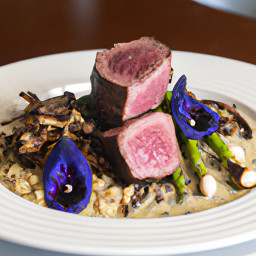
Serving Size: 2
Approximate Time
Prep
15 min
Cook
10 min
Total
30 min
Ingredients
U.S. measurements first, metric equivalents in parentheses. Conversions are approximate; oz means weight ounces, not fluid ounces.
2 boneless raw elk sirloin steaks, 8–10 oz (225–285 g) each; use about 1–1¼ lb (450–570 g) total
2 tbsp (30 ml) coarse green or black peppercorns, crushed
Salt, to taste
2 tbsp (30 g) butter
2 tbsp (30 ml) neutral oil, such as canola or grapeseed oil
¼ cup (60 ml) cognac or brandy
1 cup (240 ml) beef stock
½ cup (120 ml) heavy cream
1 tsp (5 ml) Dijon mustard (chosen from the optional amount; the method specifies a teaspoon)
Show original ingredient measurements
2 boneless raw elk sirloin steaks, 8–10 oz (225–285 g) each; use about 1–1¼ lb (450–570 g) total
2 tbsp (30 ml) coarse green or black peppercorns, crushed
Salt, to taste
2 tbsp (30 g) butter
2 tbsp (30 ml) neutral oil, such as canola or grapeseed oil
¼ cup (60 ml) cognac or brandy
1 cup (240 ml) beef stock
½ cup (120 ml) heavy cream
1 tsp Dijon mustard (chosen from the optional amount; the method specifies a teaspoon)
Instructions
1. Pat the raw elk steaks dry. Season both sides with salt to taste, then press the crushed peppercorns onto both sides.
2. Heat the oil and about half the butter in a heavy skillet over high heat. Sear the steaks for about 2–4 minutes per side, depending on thickness and desired doneness. Transfer to a warm plate and let rest.
3. Carefully add the cognac to the skillet and scrape up the browned bits. If you choose to flambé, use caution and keep the pan away from anything flammable.
4. Add the beef stock and reduce it by about half. Stir in the cream and Dijon mustard, then simmer until the sauce coats the back of a spoon.
5. Stir the remaining butter into the sauce. Return the steaks briefly to the skillet to warm, spoon sauce over them, and serve immediately.
Estimated Nutritional Information*
Per serving | Servings: 2
Calories: 804 kcal
Carbohydrates: 6.3 g
Protein: 62.5 g
Fat: 51.4 g
Saturated fat: 24 g
Cholesterol: 240 mg
Fiber: 1.8 g
Sodium: 736 mg
Potassium: 1017 mg
Calcium: 92 mg
Iron: 8.03 mg
Vitamin A: 349 µg RAE
Vitamin C: 0.4 mg
Generated: 2026-11-06T15:12:16+00:00
*Values are estimates based on USDA data and mathematical calculations. Actual values may vary. Where data are unavailable, those contributions are excluded. Calories, Carbohydrates, Protein, Fat, Saturated fat, Cholesterol, Fiber, Sodium, Potassium, Calcium, Iron, Vitamin A and Vitamin C are known subtotals. Missing contributions are unknown, not zero.