Salad: Mexico – Chiapas – Ensalada de Frutas Tropicales
Food safety reminder: Follow safe food-handling practices and use a food thermometer to verify safe internal cooking temperatures.
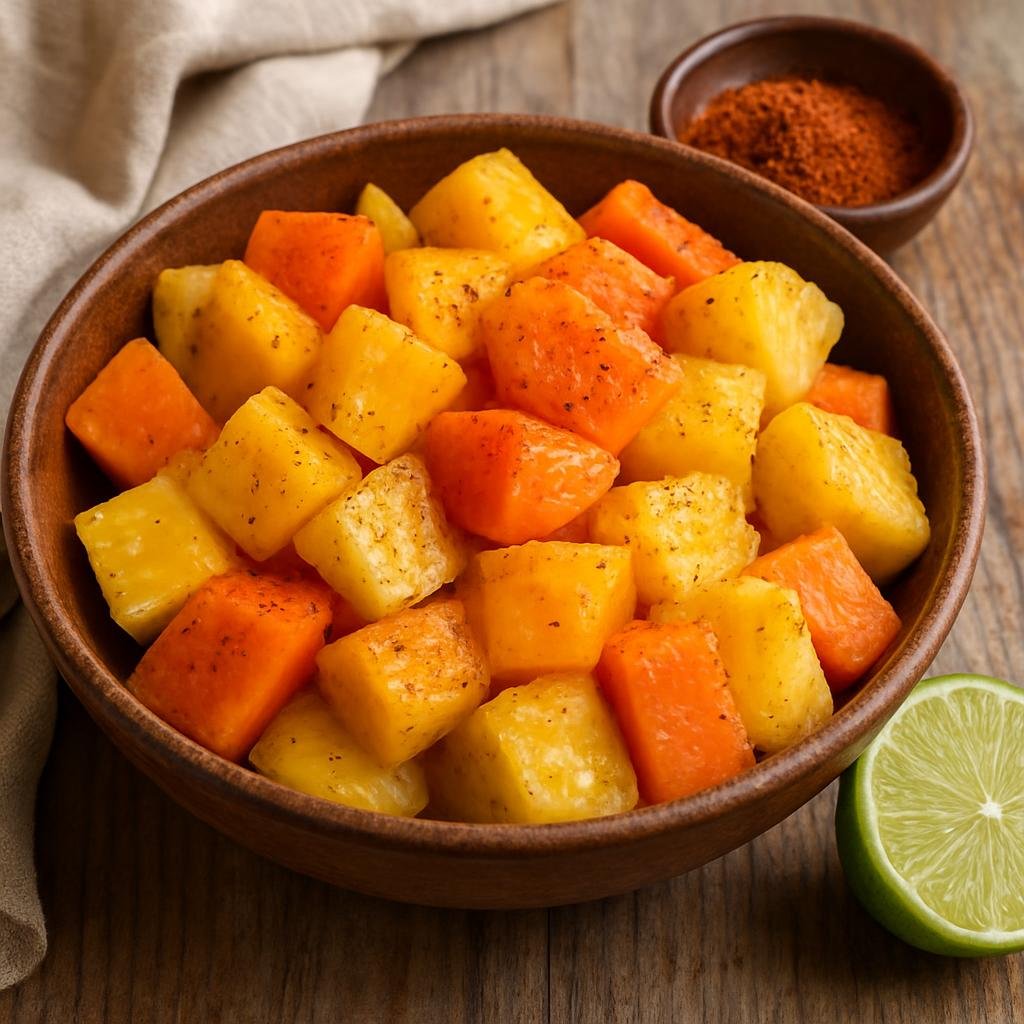
Serving Size: 4
Approximate Time
Prep
15 min
Cook
0 min
Additional
15 min
Total
30 min
Ingredients
- 2 ripe mangoes, about 1 lb (450 g) total, peeled and diced
- 1 small papaya, about 1 lb (450 g), peeled, seeded, and diced
- 2 cups (300 g) fresh pineapple, diced
- 1 cup (120 g) jicama, peeled and diced (optional for crunch)
- 1/4 cup (60 ml) freshly squeezed lime juice (about 2–3 limes)
- 2 tbsp (30 ml) freshly squeezed orange juice
- 1–2 tbsp (15–30 ml) honey or agave syrup, to taste
- 1 tsp (5 g) ground chile piquin or mild chili powder (plus extra for sprinkling)
- 1/2 tsp (3 g) fine sea salt, or to taste
- 2 tbsp (8 g) chopped fresh cilantro (optional)
- 2 tbsp (14 g) toasted unsweetened coconut flakes (optional)
- Lime wedges for serving
Instructions
U.S. measurements first, metric equivalents in parentheses. Conversions are approximate.
Short Description:
A bright Chiapanecan fruit salad combining local tropical fruits—mango, papaya, and pineapple—with a tangy lime-chile dressing for a sweet-and-spicy finish. Served chilled as a refreshing salad course or snack.

Regional Notes:
This Chiapas variation emphasizes local fruits (ripe mango, papaya, fresh pineapple) and a simple lime-and-chili dressing typical of southern Mexican palates. Ground chile piquin or a light dusting of chili powder is customary here, giving a modest heat that balances the fruit's sweetness. Jicama and toasted coconut are optional regional accents for crunch and local flavor.

1. Prepare the fruit: peel and dice the mangoes, papaya, and pineapple into bite-size pieces; place them in a large mixing bowl. If using jicama, add the diced jicama to the bowl.
2. Make the dressing: in a small bowl or jar combine the lime juice, orange juice, honey or agave, ground chile piquin (start with 1 tsp (5 ml)), and salt. Whisk or shake until the honey is fully incorporated.
3. Dress the fruit: pour the dressing over the fruit and gently toss with a large spoon to coat evenly. Taste and adjust sweetness, salt, or chile to preference.
4. Let rest: refrigerate the salad for 10–15 minutes to allow flavors to meld, but do not sit for more than 1 hour to keep the fruit texture fresh.
5. Finish and serve: just before serving, fold in chopped cilantro and toasted coconut if using. Transfer to a serving bowl, sprinkle a light dusting of extra chile powder for presentation, and offer lime wedges alongside. Serve chilled.
Show original instructions
Short Description:
A bright Chiapanecan fruit salad combining local tropical fruits—mango, papaya, and pineapple—with a tangy lime-chile dressing for a sweet-and-spicy finish. Served chilled as a refreshing salad course or snack.

Regional Notes:
This Chiapas variation emphasizes local fruits (ripe mango, papaya, fresh pineapple) and a simple lime-and-chili dressing typical of southern Mexican palates. Ground chile piquin or a light dusting of chili powder is customary here, giving a modest heat that balances the fruit's sweetness. Jicama and toasted coconut are optional regional accents for crunch and local flavor.

1. Prepare the fruit: peel and dice the mangoes, papaya, and pineapple into bite-size pieces; place them in a large mixing bowl. If using jicama, add the diced jicama to the bowl.
2. Make the dressing: in a small bowl or jar combine the lime juice, orange juice, honey or agave, ground chile piquin (start with 1 tsp), and salt. Whisk or shake until the honey is fully incorporated.
3. Dress the fruit: pour the dressing over the fruit and gently toss with a large spoon to coat evenly. Taste and adjust sweetness, salt, or chile to preference.
4. Let rest: refrigerate the salad for 10–15 minutes to allow flavors to meld, but do not sit for more than 1 hour to keep the fruit texture fresh.
5. Finish and serve: just before serving, fold in chopped cilantro and toasted coconut if using. Transfer to a serving bowl, sprinkle a light dusting of extra chile powder for presentation, and offer lime wedges alongside. Serve chilled.
Estimated Nutritional Information*
Per serving | Servings: 4
Calories: 137 kcal
Carbohydrates: 35.3 g
Protein: 1.5 g
Fat: 0.6 g
Saturated fat: 0.1 g
Fiber: 3 g
Sugar: 30.1 g
Sodium: 294 mg
Potassium: 319 mg
Calcium: 27 mg
Iron: 0.5 mg
Vitamin A: 71 µg RAE
Vitamin C: 85.8 mg
Generated: 2026-11-05T20:01:21+00:00
*Values are estimates based on USDA data and mathematical calculations. Actual values may vary. Where data are unavailable, those contributions are excluded. Calories, Carbohydrates, Protein, Fat, Saturated fat, Fiber, Sugar, Sodium, Potassium, Calcium, Iron, Vitamin A and Vitamin C are known subtotals. Missing contributions are unknown, not zero.