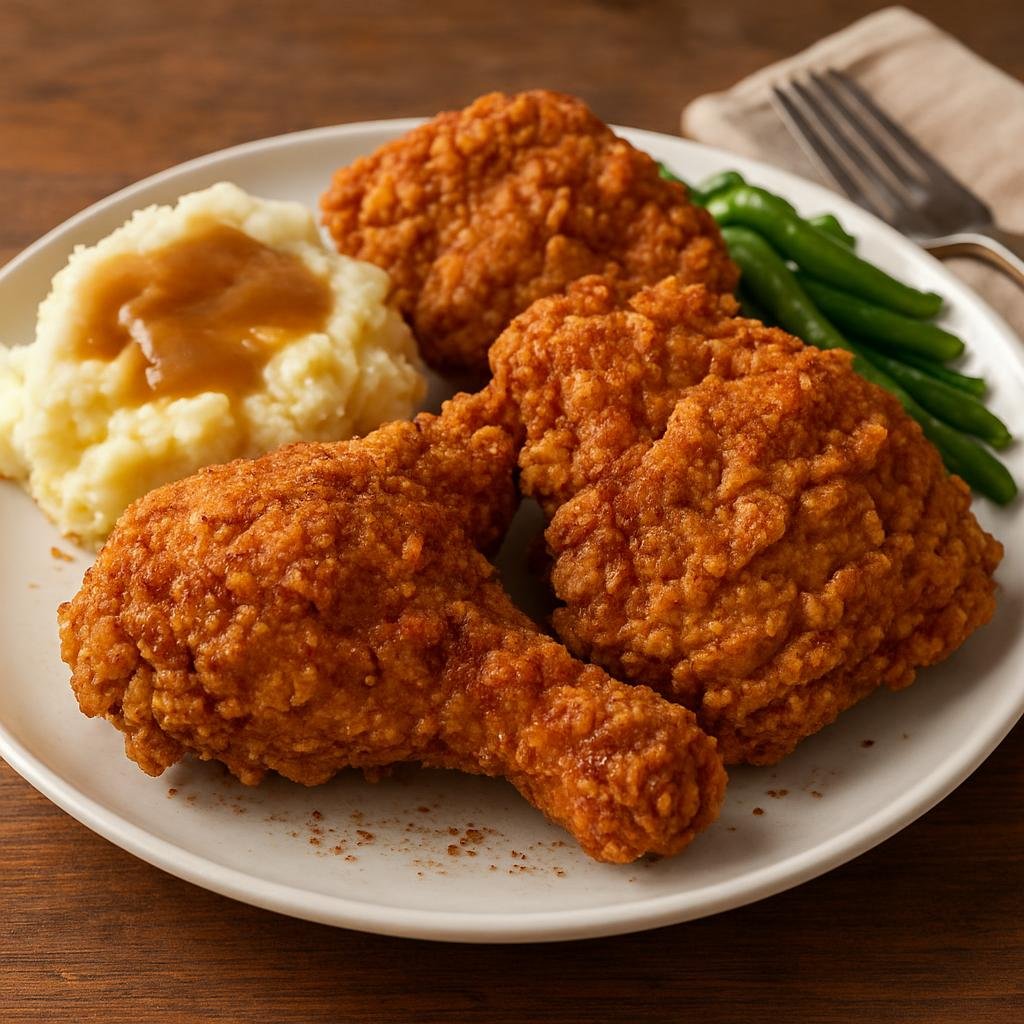
Entree: United States – Missouri, Midwestern United States – Missouri-Style Fried Chicken
Food safety reminder: Follow safe food-handling practices and use a food thermometer to verify safe internal cooking temperatures.
Serving Size: 6
Approximate Time
Prep
40 min
Cook
35 min
Additional
20 min
Total
1 hr 30 min
Ingredients
U.S. measurements first, metric equivalents in parentheses. Conversions are approximate; oz means weight ounces, not fluid ounces.
8 bone-in mixed chicken pieces (breasts, thighs, drumsticks, and wings), approximately 3.5 lb (1.6 kg) usable weight; selected example mix includes common bone-in chicken cuts.
2 cups (480 ml) buttermilk
1 tbsp (15 g) kosher salt, for the marinade
1 tsp (5 ml) hot sauce, optional
2 large eggs (about 3 1/2 oz (100 g))
1/4 cup (60 ml) whole milk
2 cups (250 g) all-purpose flour
1/2 cup (60 g) cornstarch
1 tbsp (15 g) kosher salt, for the flour mix (estimated edible portion: 0.53 oz (15 g))
2 tsp (10 ml) smoked paprika
1 tbsp (8 g) garlic powder
1 tbsp (8 g) onion powder
2 tsp (10 ml) ground black pepper
1 tsp (5 ml) cayenne pepper, adjusted to taste
1 tsp (2 g) dried thyme
1 tsp (1 g) dried sage
1 tsp (2 g) dried oregano
1 tsp (5 g) baking powder
6 cups (1.4 L) peanut oil or neutral vegetable oil, enough to submerge the chicken pieces; select either oil for frying
2 tbsp (30 g) unsalted butter, melted, for finishing
2 tbsp (8 g) chopped fresh parsley, for garnish
Mashed potatoes (starch component)
2 lb (900 g) russet potatoes, peeled and cut into 1–2-inch (2.54 to 5.08 cm) pieces
4 tbsp (56 g) unsalted butter
3/4 cup (180 ml) hot whole milk
1/2 tsp (2.5 g) kosher salt, plus more to taste
1/4 tsp (1.25 g) ground black pepper
Vinegar slaw (vegetable component)
4 cups (340 g) shredded green cabbage (about 1/2 medium head)
1 cup (110 g) shredded carrots
1/3 cup (80 ml) apple cider vinegar
2 tbsp (30 ml) vegetable oil
1 tbsp (12 g) granulated sugar
1 tsp (5 g) kosher salt
1/2 tsp (2.5 g) ground black pepper
Show original ingredient measurements
8 bone-in mixed chicken pieces (breasts, thighs, drumsticks, and wings), approximately 3.5 lb (1.6 kg) usable weight; selected example mix includes common bone-in chicken cuts.
2 cups (480 ml) buttermilk
1 tbsp (15 g) kosher salt, for the marinade
1 tsp (5 ml) hot sauce, optional
2 large eggs (about 100 g)
1/4 cup (60 ml) whole milk
2 cups (250 g) all-purpose flour
1/2 cup (60 g) cornstarch
1 tbsp (15 g) kosher salt, for the flour mix (estimated edible portion: 15 g)
2 tsp (10 ml) smoked paprika
1 tbsp (8 g) garlic powder
1 tbsp (8 g) onion powder
2 tsp (10 ml) ground black pepper
1 tsp (5 ml) cayenne pepper, adjusted to taste
1 tsp (2 g) dried thyme
1 tsp (1 g) dried sage
1 tsp (2 g) dried oregano
1 tsp (5 g) baking powder
6 cups (1.4 L) peanut oil or neutral vegetable oil, enough to submerge the chicken pieces; select either oil for frying
2 tbsp (30 g) unsalted butter, melted, for finishing
2 tbsp (8 g) chopped fresh parsley, for garnish
Mashed potatoes (starch component)
2 lb (900 g) russet potatoes, peeled and cut into 1–2-inch pieces
4 tbsp (56 g) unsalted butter
3/4 cup (180 ml) hot whole milk
1/2 tsp (2.5 g) kosher salt, plus more to taste
1/4 tsp (1.25 g) ground black pepper
Vinegar slaw (vegetable component)
4 cups (340 g) shredded green cabbage (about 1/2 medium head)
1 cup (110 g) shredded carrots
1/3 cup (80 ml) apple cider vinegar
2 tbsp (30 ml) vegetable oil
1 tbsp (12 g) granulated sugar
1 tsp (5 g) kosher salt
1/2 tsp (2.5 g) ground black pepper
Instructions
U.S. measurements first, metric equivalents in parentheses. Conversions are approximate.
1. Pat the chicken dry. Mix the buttermilk, 1 tablespoon (15 ml) of kosher salt, and optional hot sauce in a large bowl or resealable bag. Add the chicken, cover, and refrigerate for at least 4 hours or overnight.
2. Prepare the mashed potatoes. Put the potatoes in a large pot, cover with cold water, and add a pinch of salt. Bring to a boil, then reduce to a simmer and cook for 15–20 minutes, until fork-tender. Drain well.
3. Mash the drained potatoes with 4 tablespoons (60 ml) butter and the hot milk until smooth. Season with 1/2 teaspoon (2.5 ml) salt and 1/4 teaspoon (1.25 ml) pepper. Keep warm.
4. Make the slaw dressing by whisking together the apple cider vinegar, vegetable oil, sugar, 1 teaspoon (5 ml) salt, and 1/2 teaspoon (2.5 ml) pepper. Add the cabbage and carrots and toss well. Let stand for at least 10 minutes, then refrigerate until serving.
5. Set up the dredging station. In a shallow bowl, whisk the eggs with 1/4 cup (60 ml) milk. In a wide, shallow dish, whisk together the flour, cornstarch, 1 tablespoon (15 ml) salt, smoked paprika, garlic powder, onion powder, black pepper, cayenne, thyme, sage, oregano, and baking powder.
6. Lift the chicken from the buttermilk and let excess marinade drip off. Dredge each piece in the seasoned flour, dip it in the egg mixture, then return it to the flour. Press the coating onto the chicken for a thick, even crust. Set the coated pieces on a wire rack and rest for 15–20 minutes.
7. Pour the frying oil into a deep, heavy pot or Dutch oven to a depth of about 3–4 inches (7.62 to 10.2 cm), enough to submerge the chicken pieces. Heat over medium heat to 325°F (163°C), and maintain the oil between 325°F and 350°F (163–177°C) while frying.
8. Fry the chicken in uncrowded batches, about 2–3 pieces at a time depending on pot size. Cook for approximately 12–18 minutes per piece, turning once or twice, until deep golden and the thickest part reaches 165°F (74°C). Adjust the heat as needed to maintain the oil temperature.
9. Transfer the cooked chicken to a wire rack set over a baking sheet to drain and stay crisp. Lightly brush with melted butter, garnish with parsley, and rest for 5 minutes before serving.
10. Reheat the mashed potatoes briefly if needed. Serve each person 1–2 pieces of chicken with mashed potatoes and vinegar slaw. Serve hot.
Show original instructions
1. Pat the chicken dry. Mix the buttermilk, 1 tablespoon of kosher salt, and optional hot sauce in a large bowl or resealable bag. Add the chicken, cover, and refrigerate for at least 4 hours or overnight.
2. Prepare the mashed potatoes. Put the potatoes in a large pot, cover with cold water, and add a pinch of salt. Bring to a boil, then reduce to a simmer and cook for 15–20 minutes, until fork-tender. Drain well.
3. Mash the drained potatoes with 4 tablespoons butter and the hot milk until smooth. Season with 1/2 teaspoon salt and 1/4 teaspoon pepper. Keep warm.
4. Make the slaw dressing by whisking together the apple cider vinegar, vegetable oil, sugar, 1 teaspoon salt, and 1/2 teaspoon pepper. Add the cabbage and carrots and toss well. Let stand for at least 10 minutes, then refrigerate until serving.
5. Set up the dredging station. In a shallow bowl, whisk the eggs with 1/4 cup milk. In a wide, shallow dish, whisk together the flour, cornstarch, 1 tablespoon salt, smoked paprika, garlic powder, onion powder, black pepper, cayenne, thyme, sage, oregano, and baking powder.
6. Lift the chicken from the buttermilk and let excess marinade drip off. Dredge each piece in the seasoned flour, dip it in the egg mixture, then return it to the flour. Press the coating onto the chicken for a thick, even crust. Set the coated pieces on a wire rack and rest for 15–20 minutes.
7. Pour the frying oil into a deep, heavy pot or Dutch oven to a depth of about 3–4 inches, enough to submerge the chicken pieces. Heat over medium heat to 325°F (163°C), and maintain the oil between 325°F and 350°F (163–177°C) while frying.
8. Fry the chicken in uncrowded batches, about 2–3 pieces at a time depending on pot size. Cook for approximately 12–18 minutes per piece, turning once or twice, until deep golden and the thickest part reaches 165°F (74°C). Adjust the heat as needed to maintain the oil temperature.
9. Transfer the cooked chicken to a wire rack set over a baking sheet to drain and stay crisp. Lightly brush with melted butter, garnish with parsley, and rest for 5 minutes before serving.
10. Reheat the mashed potatoes briefly if needed. Serve each person 1–2 pieces of chicken with mashed potatoes and vinegar slaw. Serve hot.
Estimated Nutritional Information*
Per serving | Servings: 6
Calories: 1081 kcal
Carbohydrates: 85.1 g
Protein: 72.3 g
Fat: 49.5 g
Sodium: 2924 mg
Potassium: 1846 mg
Calcium: 309 mg
Iron: 7.4 mg
Vitamin C: 50.4 mg
Generated: 2026-11-06T07:55:17+00:00
*Values are estimates based on USDA data and mathematical calculations. Actual values may vary. Where data are unavailable, those contributions are excluded. Calories, Carbohydrates, Protein, Fat, Sodium, Potassium, Calcium, Iron and Vitamin C are known subtotals. Missing contributions are unknown, not zero.