Entree: Mexico – Caldo de Res con Frijoles y Verduras (Beef and Pinto Bean Vegetable Stew)
Food safety reminder: Follow safe food-handling practices and use a food thermometer to verify safe internal cooking temperatures.
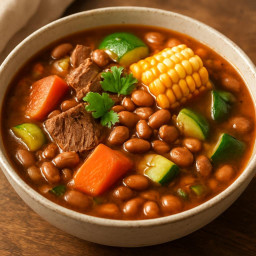
Serving Size: 4
Approximate Time
Prep
15 min
Cook
1 hr 50 min
Total
2 hrs 5 min
Ingredients
U.S. measurements first, metric equivalents in parentheses. Conversions are approximate; oz means weight ounces, not fluid ounces.
- 2 lb (907 g) rump roast, cut into 1½-inch (3.8 cm) cubes
- 2 cups (480 ml) diced tomato (about 3 medium tomatoes)
- 1 medium (6 oz (170 g)) yellow onion, chopped
- 4 cloves (0.42 oz (12 g)) garlic, crushed
- 2 medium (6 oz (170 g)) carrots, sliced
- 8 oz (227 g) purple potatoes, cut into 1-inch (2.5 cm) cubes
- 1 medium (6 oz (170 g)) green bell pepper, chopped
- 1½ cups (255 g) cooked pinto beans, including a small amount of bean cooking liquid
Show original ingredient measurements
- 2 lb (907 g) rump roast, cut into 1½-inch (3.8 cm) cubes
- 2 cups (480 ml) diced tomato (about 3 medium tomatoes)
- 1 medium (6 oz / 170 g) yellow onion, chopped
- 4 cloves (12 g) garlic, crushed
- 2 medium (6 oz / 170 g) carrots, sliced
- 8 oz (227 g) purple potatoes, cut into 1-inch (2.5 cm) cubes
- 1 medium (6 oz / 170 g) green bell pepper, chopped
- 1½ cups (255 g) cooked pinto beans, including a small amount of bean cooking liquid
Instructions
1. Brown the cubed rump roast in batches in a large pot to develop color, then return all beef to the pot.
2. Add chopped onion and crushed garlic; cook briefly until softened, then stir in diced tomato and any tomato juices.
3. Add carrots, purple potatoes, chopped green pepper, and the cooked pinto beans with a little of their cooking liquid to create a simmering base.
4. Bring to a gentle simmer, cover, and cook for 1½ to 2 hours until beef is tender and vegetables are cooked through.
5. Uncover and simmer a few minutes more if you prefer a thicker stew; serve hot as a substantial entree.
Estimated Nutritional Information*
Per serving | Servings: 4
Calories: 196 kcal
Carbohydrates: 40.5 g
Protein: 9 g
Fat: 0.8 g
Saturated fat: 0.2 g
Fiber: 10.5 g
Sugar: 7.5 g
Sodium: 41 mg
Potassium: 980 mg
Calcium: 77 mg
Iron: 2.41 mg
Vitamin A: 394 µg RAE
Vitamin C: 62.7 mg
Nutrition estimated: November 5, 2026
*Values are estimates based on USDA data and mathematical calculations. Actual values may vary. Where data are unavailable, those contributions are excluded. Calories, Carbohydrates, Protein, Fat, Saturated fat, Fiber, Sugar, Sodium, Potassium, Calcium, Iron, Vitamin A and Vitamin C are known subtotals. Missing contributions are unknown, not zero.