Entree: Russia – Russian Jewish Cuisine – קישקע ➤ Kishke (Ashkenazi stuffed casing or loaf of spiced meat fat and matzo meal cooked with meat)
Food safety reminder: Follow safe food-handling practices and use a food thermometer to verify safe internal cooking temperatures.
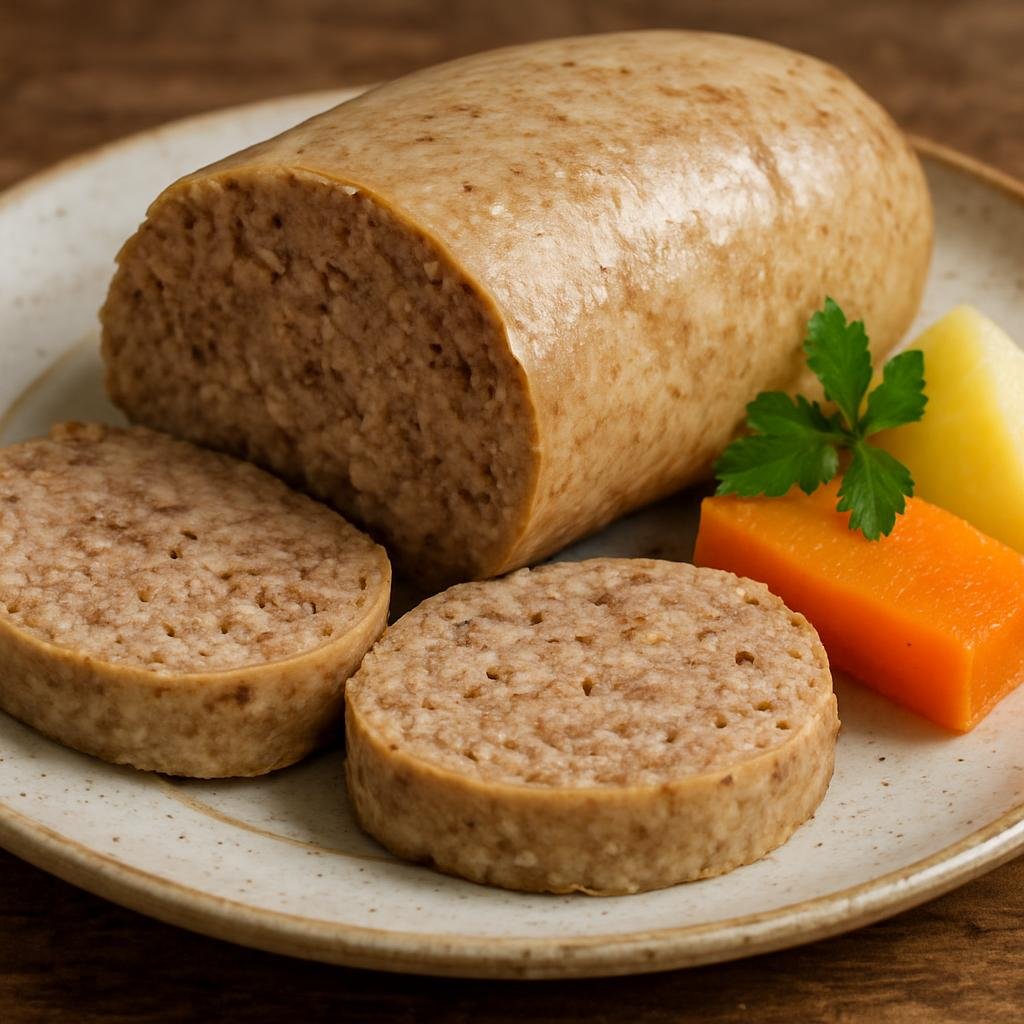
Serving Size: 6
Approximate Time
Prep
20 min
Cook
2 hrs
Additional
15 min
Total
2 hrs 15 min
Ingredients
U.S. measurements first, metric equivalents in parentheses. Conversions are approximate; oz means weight ounces, not fluid ounces.
- 1 cleaned beef casing, about 3 ft (35 3/8 in (90 cm)) or 1 synthetic sausage casing
- 1 lb (454 g) beef suet or trimmed beef fat, finely chopped
- 8 oz (225 g) ground beef chuck
- 2 cups (240 g) matzo meal
- 1 large onion, finely chopped, about 8 oz (225 g)
- 2 large eggs, about 3 1/2 oz (100 g) total
- 1/2 cup (120 ml) beef or chicken stock
- 2 tbsp (30 ml) schmaltz or neutral oil
- 2 tsp (10 g) kosher salt
- 1 tsp (2 g) freshly ground black pepper
- 1 tsp (2 g) sweet paprika
- 2 cloves garlic, minced
- 1 tsp (5 g) dried marjoram or 1 tbsp (3 g) fresh chopped
- 2 tbsp (30 ml) tomato paste (optional, for color)
Show original ingredient measurements
- 1 cleaned beef casing, about 3 ft (90 cm) or 1 synthetic sausage casing
- 1 lb (454 g) beef suet or trimmed beef fat, finely chopped
- 8 oz (225 g) ground beef chuck
- 2 cups (240 g) matzo meal
- 1 large onion, finely chopped, about 8 oz (225 g)
- 2 large eggs, about 100 g total
- 1/2 cup (120 ml) beef or chicken stock
- 2 tbsp (30 ml) schmaltz or neutral oil
- 2 tsp (10 g) kosher salt
- 1 tsp (2 g) freshly ground black pepper
- 1 tsp (2 g) sweet paprika
- 2 cloves garlic, minced
- 1 tsp (5 g) dried marjoram or 1 tbsp (3 g) fresh chopped
- 2 tbsp (30 ml) tomato paste (optional, for color)
Instructions
1. Prepare stuffing: In a large skillet, heat schmaltz or oil over medium heat. Add chopped onion and cook until translucent, about 8–10 minutes. Add garlic and cook 1 minute more. Remove from heat and let cool slightly.
2. In a large bowl combine chopped beef suet, ground beef, matzo meal, cooled onion mixture, eggs, stock, salt, pepper, paprika, marjoram, and tomato paste if using. Mix until a sticky, cohesive filling forms; adjust with a little more stock if too dry or a bit more matzo meal if too wet.
3. If using casing: rinse and keep casing moist. Fit one end on a funnel or stuffing horn and spoon or press filling into casing, leaving room to tie ends; do not overstuff—aim for a firm but flexible fill. Tie ends and trim excess. If not using casing: shape filling into a tight loaf and wrap in cheesecloth or place in a greased loaf pan.
4. Cooking options: a) To bake: place kishke or loaf in a roasting pan with 1/2 inch (12 mm) water or stock, cover tightly with foil, and bake at 350°F (175°C) for 1½ hours; remove foil and bake 20–30 minutes more to brown. b) To simmer (traditional with cholent): place kishke in a large pot with simmering beef or chicken stock, cover, and simmer gently for 2–3 hours, turning once, until firm.
5. Rest 15 minutes after cooking, then slice into 1/2–3/4 inch (1.5–2 cm) portions. Serve warm alongside braised beef, potatoes, or as part of a Sabbath stew.
Estimated Nutritional Information*
Per serving | Servings: 6
Calories: 268 kcal
Carbohydrates: 6 g
Protein: 26.6 g
Fat: 15.4 g
Saturated fat: 4.8 g
Cholesterol: 136 mg
Fiber: 1.4 g
Sugar: 2.4 g
Sodium: 835 mg
Potassium: 560 mg
Calcium: 58 mg
Iron: 3.77 mg
Vitamin A: 45 µg RAE
Vitamin C: 4.7 mg
Vitamin D: 0.4 µg
Generated: 2026-11-06T05:38:56+00:00
*Values are estimates based on USDA data and mathematical calculations. Actual values may vary. Where data are unavailable, those contributions are excluded. Calories, Carbohydrates, Protein, Fat, Saturated fat, Cholesterol, Fiber, Sugar, Sodium, Potassium, Calcium, Iron, Vitamin A, Vitamin C and Vitamin D are known subtotals. Missing contributions are unknown, not zero.