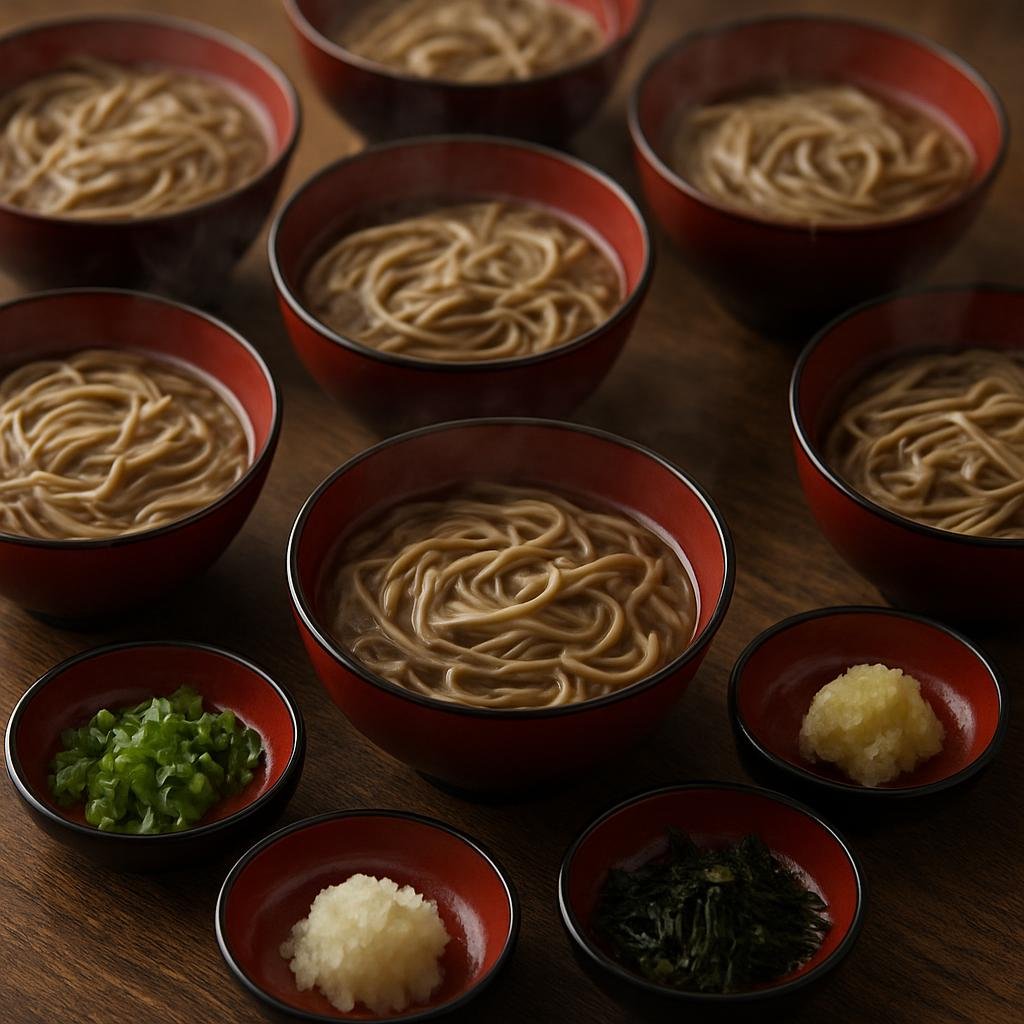
Entree: Japan – Tohoku – わんこそば ➤ Wanko-soba (Tohoku-style buckwheat noodles served in many small bowls with hot broth and assorted condiments)
Food safety reminder: Follow safe food-handling practices and use a food thermometer to verify safe internal cooking temperatures.
Serving Size: 4
Approximate Time
Prep
15 min
Cook
10 min
Total
25 min
Ingredients
- 1 lb (454 g) dried soba noodles
- 8 cups (1.9 L) dashi stock (made from kombu and katsuobushi or instant dashi)
- 1/2 cup (120 ml) soy sauce
- 1/4 cup (60 ml) mirin
- 2 tbsp (30 ml) sake (optional)
- 2 tsp (10 g) granulated sugar
- 4 scallions, thinly sliced
- 1/2 cup (50 g) tenkasu (tempura bits)
- 1/2 cup (25 g) shredded nori or toasted seaweed strips
- 1/2 cup (120 ml) grated daikon radish (optional)
- Wasabi paste, to taste
- Shichimi togarashi (Japanese seven-spice), to taste
- Small bowls for serving (no measurement)
Instructions
1. Make the tsuyu-style hot broth: combine dashi stock, soy sauce, mirin, sake (if using) and sugar in a pot, bring to a gentle simmer, taste and adjust seasoning; keep hot over low heat.
2. Bring a large pot of water to a rolling boil and cook the dried soba according to package instructions until al dente (usually 4–5 minutes); stirring gently to prevent sticking.
3. Drain the cooked soba into a colander and rinse briefly under cold running water to remove excess starch if you prefer; for wanko style some prefer a quick hot rinse—choose according to texture desired—then drain well.
4. Prepare condiments: place sliced scallions, tenkasu, grated daikon, nori strips, wasabi and shichimi in small communal dishes so guests can assemble their preferred toppings.
5. To serve in authentic wanko fashion, ladle a small amount of hot broth into each small individual bowl, place a small bundle of noodles into the bowl and bring to the table; repeat servings as guests finish each small bowl.
6. For a home-party approach, place several small bowls per guest and keep the broth hot; replenish each bowl with a few noodles and hot tsuyu several times so guests can enjoy multiple short servings.
7. Encourage guests to top each bowl as they like with scallions, tenkasu, nori, a dab of wasabi, grated daikon, or a sprinkle of shichimi; pace servings so broth remains hot and noodles are freshly served.
8. When finished, some traditions place a final bowl with a raw quail egg or a light pour of broth as a closing bowl; this is optional—offer it warmed if using.
Estimated Nutritional Information*
Per serving | Servings: 4
Calories: 578 kcal
Carbohydrates: 113.1 g
Protein: 23.7 g
Fat: 6.9 g
Nutrition estimated: November 5, 2026
*Values are estimates based on USDA data and mathematical calculations. Actual values may vary. Where data are unavailable, those contributions are excluded. Calories, Carbohydrates, Protein and Fat are known subtotals. Missing contributions are unknown, not zero.