Entree: Italy – Liguria – Ravioli di Boragine (Fresh stuffed pasta filled with borage greens and cheese)
Food safety reminder: Follow safe food-handling practices and use a food thermometer to verify safe internal cooking temperatures.
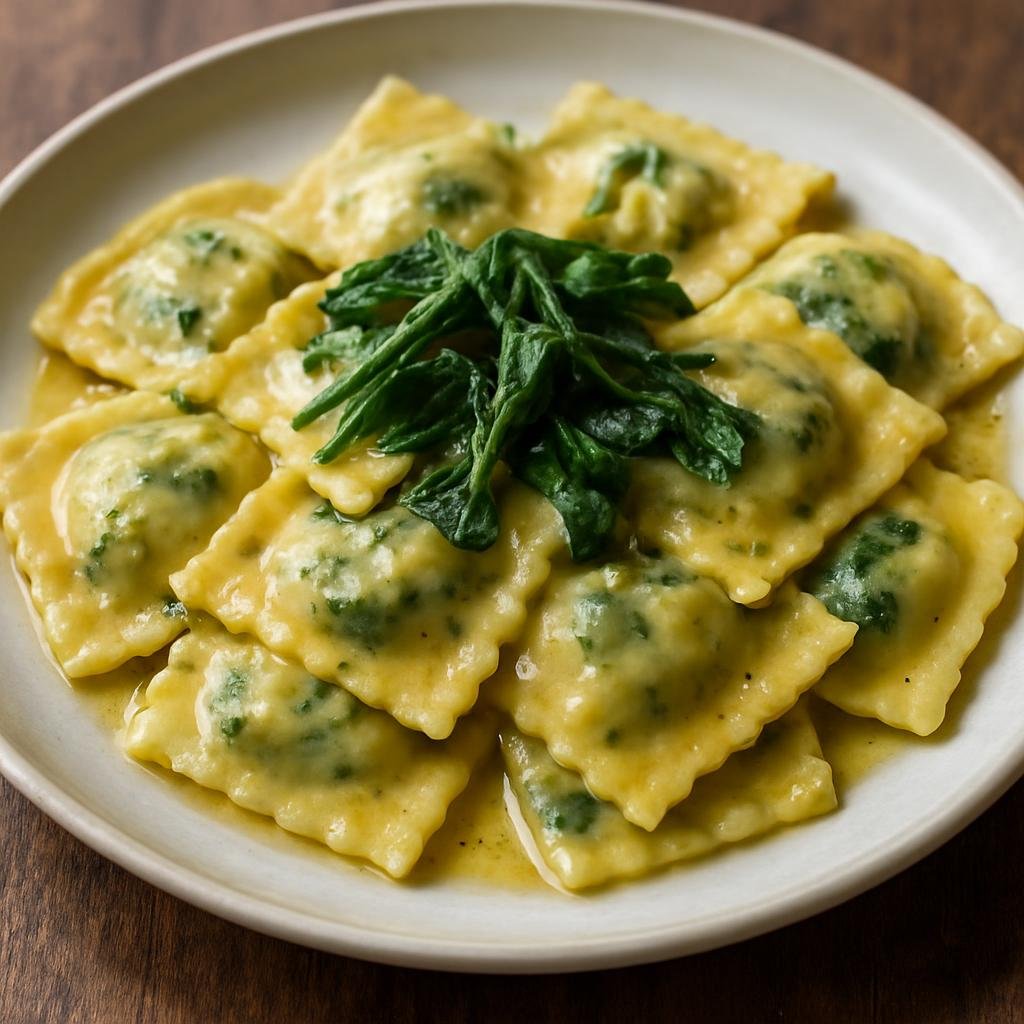
Ingredients
U.S. measurements first, metric equivalents in parentheses. Conversions are approximate; oz means weight ounces, not fluid ounces.
- 2 cups (250 g) "00" or all-purpose flour
- 3 large eggs, approx. 5 1/4 oz (150 g) total
- 1 tbsp (15 ml) extra-virgin olive oil
- 1 tsp (6 g) fine salt for dough
- 8 oz (225 g) fresh borage leaves, packed (stems removed)
- 1 cup (250 g) whole-milk ricotta, well drained
- 1/2 cup (50 g) finely grated Parmigiano-Reggiano
- 1 large egg, approx. 1 3/4 oz (50 g) (for filling)
- 1/8 tsp (0.5 g) freshly grated nutmeg
- Salt and freshly ground black pepper to taste
- Extra flour for dusting: 1/4 cup (30 g)
- 4 tbsp (60 g) unsalted butter
- 8–10 fresh sage leaves
- 2 tbsp (30 ml) extra-virgin olive oil for finishing
- Additional grated Parmigiano-Reggiano for serving: 1/4 cup (25 g)
Show original ingredient measurements
- 2 cups (250 g) "00" or all-purpose flour
- 3 large eggs, approx. 150 g total
- 1 tbsp (15 ml) extra-virgin olive oil
- 1 tsp (6 g) fine salt for dough
- 8 oz (225 g) fresh borage leaves, packed (stems removed)
- 1 cup (250 g) whole-milk ricotta, well drained
- 1/2 cup (50 g) finely grated Parmigiano-Reggiano
- 1 large egg, approx. 50 g (for filling)
- 1/8 tsp (0.5 g) freshly grated nutmeg
- Salt and freshly ground black pepper to taste
- Extra flour for dusting: 1/4 cup (30 g)
- 4 tbsp (60 g) unsalted butter
- 8–10 fresh sage leaves
- 2 tbsp (30 ml) extra-virgin olive oil for finishing
- Additional grated Parmigiano-Reggiano for serving: 1/4 cup (25 g)
Instructions
U.S. measurements first, metric equivalents in parentheses. Conversions are approximate.
1. Make the pasta dough: on a clean work surface mound the flour and make a well. Add the 3 eggs, 1 tbsp (15 ml) olive oil and 1 tsp (5 ml) salt into the well; gradually incorporate flour into the eggs until a shaggy dough forms. Knead 8–10 minutes until smooth and elastic. Wrap in plastic and rest 30 minutes at room temperature.
2. Prepare the borage: blanch the borage leaves in boiling salted water 30–45 seconds until wilted. Drain and immediately plunge into ice water to stop cooking. Squeeze out excess liquid and chop finely; weigh if necessary to equal about 8 oz (225 g) packed leaves before chopping.
3. Make the filling: combine chopped borage, ricotta, 1/2 cup (120 ml) grated Parmigiano, 1 large egg (approx. 1 3/4 oz (50 g)), nutmeg, and salt and pepper to taste. Mix until cohesive and refrigerate while rolling pasta.
4. Roll and cut pasta: divide rested dough into 4 pieces. Roll each piece thin using a pasta machine or rolling pin to about 0.0591 in (1.5 mm) thickness. Cut into 2.5–3 inch (6–7.5 cm) rounds or squares depending on preferred shape.
5. Assemble ravioli: place about 1 tsp (approx. 6–8 g) filling on half of the rounds, brush edges with a little water, top with remaining rounds and press to seal, expelling air. Crimp edges with fork or pasta cutter. Dust finished ravioli lightly with flour.
6. Cook ravioli: bring a large pot of salted water to a gentle boil. Cook ravioli in batches 3–4 minutes or until they float and are tender. Remove with a slotted spoon.
7. Make the sauce: melt 4 tbsp (60 g) butter in a skillet over medium heat until it foams and begins to brown slightly. Add sage leaves and fry briefly until crisp. Remove from heat and stir in 2 tbsp (30 ml) olive oil.
8. Serve: transfer cooked ravioli to the skillet and gently toss in the butter-sage sauce to coat. Plate and finish with additional grated Parmigiano-Reggiano (1/4 cup (25 g)) and a few cracks of black pepper.
Show original instructions
1. Make the pasta dough: on a clean work surface mound the flour and make a well. Add the 3 eggs, 1 tbsp olive oil and 1 tsp salt into the well; gradually incorporate flour into the eggs until a shaggy dough forms. Knead 8–10 minutes until smooth and elastic. Wrap in plastic and rest 30 minutes at room temperature.
2. Prepare the borage: blanch the borage leaves in boiling salted water 30–45 seconds until wilted. Drain and immediately plunge into ice water to stop cooking. Squeeze out excess liquid and chop finely; weigh if necessary to equal about 8 oz (225 g) packed leaves before chopping.
3. Make the filling: combine chopped borage, ricotta, 1/2 cup grated Parmigiano, 1 large egg (approx. 50 g), nutmeg, and salt and pepper to taste. Mix until cohesive and refrigerate while rolling pasta.
4. Roll and cut pasta: divide rested dough into 4 pieces. Roll each piece thin using a pasta machine or rolling pin to about 1.5 mm thickness. Cut into 2.5–3 inch (6–7.5 cm) rounds or squares depending on preferred shape.
5. Assemble ravioli: place about 1 tsp (approx. 6–8 g) filling on half of the rounds, brush edges with a little water, top with remaining rounds and press to seal, expelling air. Crimp edges with fork or pasta cutter. Dust finished ravioli lightly with flour.
6. Cook ravioli: bring a large pot of salted water to a gentle boil. Cook ravioli in batches 3–4 minutes or until they float and are tender. Remove with a slotted spoon.
7. Make the sauce: melt 4 tbsp (60 g) butter in a skillet over medium heat until it foams and begins to brown slightly. Add sage leaves and fry briefly until crisp. Remove from heat and stir in 2 tbsp (30 ml) olive oil.
8. Serve: transfer cooked ravioli to the skillet and gently toss in the butter-sage sauce to coat. Plate and finish with additional grated Parmigiano-Reggiano (1/4 cup / 25 g) and a few cracks of black pepper.
Per serving | Servings: 4
Generated: 2026-11-05T19:55:14+00:00
*Values are estimates based on USDA data and mathematical calculations. Actual values may vary. Where data are unavailable, those contributions are excluded. Calories, Carbohydrates, Protein, Fat, Saturated fat, Cholesterol, Fiber, Sugar, Sodium, Potassium, Calcium, Iron, Vitamin A, Vitamin C and Vitamin D are known subtotals. Missing contributions are unknown, not zero.